

How to Compare Sintered Stone Supplier Quotations
When several sintered stone suppliers send quotations for the same project, the lowest unit price can be tempting. But a quotation is only useful for comparison when the offers are based on comparable products, quantities, delivery conditions, and commercial terms.
Two quotations can show very different prices while ultimately representing similar costs. The difference may come from thickness, surface finish, dimensions, packaging, minimum order requirements, freight terms, lead time, or what is included in the quoted price.
For importers, distributors, contractors, and project procurement teams, the better approach is to compare the complete offer rather than selecting a supplier from the headline number alone.
Start by Making the Quotations Comparable
Before comparing prices, establish whether the suppliers are actually quoting the same product.
This sounds straightforward, but quotation comparisons often become misleading because one supplier provides a detailed specification while another gives only a product name and unit price.
Start with the basic product description. Confirm that the quotations refer to the same material type, colour or design, surface finish, dimensions, thickness, and intended format. If the project requires a particular finish or appearance, those details should appear clearly in each quotation.
Quantity also needs to be consistent. A supplier quoting a price for a small sample quantity is not necessarily offering the same commercial conditions as one quoting a production order.
The objective is to create a genuinely like-for-like comparison before evaluating which offer is more competitive.
If thickness is an important variable in the project, it should be treated as a specification to normalize rather than an isolated price factor. The appropriate thickness depends on the application and project requirements; the detailed selection process is covered in How to Choose the Right Sintered Stone Thickness for a Project.
Compare the Product Specification Before Comparing the Price
A quotation should be evaluated as a specification, not simply as a number.
For example, suppose one supplier quotes a lower price for a large-format sintered stone product. If the dimensions, thickness, finish, or product construction differ from another supplier's offer, the two prices cannot be compared directly.
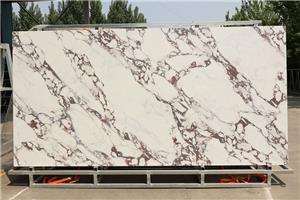
This becomes particularly important when quotations are based on product names rather than complete specifications. Similar-looking colours or marble-inspired designs may still represent different products, finishes, or production specifications.
For a commercial project, it is useful to confirm the details that could affect purchasing and installation before accepting a quotation. Depending on the product and application, these may include:
product format and dimensions;
thickness;
surface finish;
colour or design;
quantity;
technical specification;
packaging requirements;
inspection or quality-control requirements.
The purpose is not to request unnecessary information. It is to make sure that every supplier is pricing the same requirement.
When a specification remains unclear, asking for written confirmation is usually more valuable than assuming that apparently similar products are equivalent.
Check Whether the Quantities and Pricing Units Match
Price comparisons become especially unreliable when suppliers use different units.
One quotation may be based on square metres, another on individual pieces, and another on slabs or panels. The numbers may look dramatically different even though the underlying material value is similar.
Before comparing the quoted amount, establish what the price actually represents.
For tile-format products, check whether the quotation is calculated by square metre, box, piece, or another unit. For slabs, determine whether the price is based on individual slabs, total square metres, or a specified quantity.
The quoted quantity also matters. A supplier may offer a particular unit price based on a production quantity that is substantially larger or smaller than the project's actual requirement.
Wastage can create another difference. If the project quantity is calculated differently by different suppliers, the total order value may not be comparable even when the nominal unit price is identical.
This is why a useful quotation comparison should normalize both price and quantity.
Look Beyond the Product Price
The product price is only one part of the procurement cost.
Depending on the supplier and delivery arrangement, a quotation may include some costs while excluding others. Packaging, inland transportation, export-related handling, freight, insurance, or destination charges may be treated differently from one quotation to another.
For an importer, this distinction can significantly affect the final cost of the material.
For example, a supplier offering a lower factory price may not necessarily provide the lower overall procurement cost if another quotation includes more of the associated logistics or packaging costs.
The right question is therefore not simply:
“Which supplier has the lowest price?”
It is:
“What exactly is included in each quoted price, and what additional costs will I need to account for?”
The answer will depend on the agreed delivery terms and the buyer's location, so these details should be confirmed in writing rather than inferred from the quotation.
Compare Packaging and Quality Control Requirements
Sintered stone products need to reach the buyer in the condition expected when the order was placed. Packaging and quality-control arrangements therefore deserve attention during quotation comparison.
A quotation should make it possible to understand how the material will be prepared for shipment and whether the packaging requirements have been considered.
For larger commercial orders, buyers may also want to clarify what inspection or quality-control procedures apply before shipment. Depending on the project, relevant checks may involve product appearance, dimensions, finish, quantity, packaging condition, or other agreed specifications.
The important point is that quality should not be treated as an assumption simply because two quotations describe similar products.
If a project has defined quality requirements, communicate them before quotation and compare how each supplier addresses those requirements.
A slightly different unit price may be reasonable if the underlying specification, inspection requirements, or packaging arrangement is also different. What matters is understanding the difference before making the purchasing decision.
Read MOQ, Lead Time, and Delivery Terms Carefully
Commercial terms can change the practical value of a quotation.
Minimum order quantity is one example. A supplier may offer an attractive unit price but require an order quantity substantially above the project's immediate needs. Another supplier may quote a higher unit price while offering a quantity structure that better fits the project.
Neither situation is automatically better. The relevant question is which arrangement works for the actual procurement plan.
Lead time should be considered in the same way. A quotation with a competitive price may be less useful if the production schedule does not align with the project's required delivery date.
Delivery terms also need to be compared on the same basis. If one supplier quotes on one delivery basis and another uses a different arrangement, the figures should not be treated as equivalent until the associated responsibilities and costs are understood.
This is particularly important for international purchasing, where the point at which responsibility and cost transfer can affect the final procurement calculation.
Compare Payment Terms and Commercial Conditions
Price is only one component of a supplier's commercial offer.
Payment terms can affect cash flow, order planning, and purchasing risk. Buyers should therefore compare the payment structure rather than looking only at the total quotation amount.
Other conditions can also matter, including quotation validity, production scheduling, order confirmation requirements, currency, and procedures for changes to an order.
A quotation that is clear about these conditions is easier to evaluate than one that leaves important commercial details open.
For larger projects, it is sensible to keep the agreed specification and commercial terms together so that the final purchase order reflects what was actually quoted.
Build a Total-Value Comparison Instead of Choosing the Lowest Quote
Once the specifications and commercial terms have been normalized, the quotations can be evaluated more meaningfully.
A practical comparison considers:
Product specification + quoted price + quantity + packaging + logistics + commercial terms + quality requirements
This does not mean creating an unnecessarily complicated purchasing model. It means identifying differences that could materially affect the final procurement decision.
Imagine three suppliers provide quotations for a similar project.
Supplier A has the lowest unit price, but its quotation excludes certain costs and requires a larger minimum order.
Supplier B has a slightly higher unit price but provides a quotation with clearer packaging, delivery, and inspection conditions.
Supplier C offers a similar price to Supplier B but has a longer production lead time.
There is no universal rule that determines which supplier is best. The correct choice depends on the project's priorities.
If delivery timing is critical, lead time may carry more weight. If the order is relatively small, MOQ may matter more. If the material is being shipped internationally, logistics and packaging may deserve closer attention.
The purpose of quotation comparison is to make these differences visible.
Questions to Ask Before Accepting a Sintered Stone Quotation
A good quotation should leave the buyer with a clear understanding of what is being purchased and under what conditions.
Before accepting an offer, confirm that the quotations being compared use the same product specification and quantity basis. Check whether the quoted price includes the packaging and delivery elements you expect, and clarify anything that is excluded.
It is also worth confirming the minimum order quantity, production lead time, payment terms, quotation validity, and quality-control arrangements.
If the project has specific requirements for colour consistency, surface finish, dimensions, packaging, inspection, or documentation, those requirements should be communicated clearly rather than assumed.
The more significant the order, the more important it becomes to have the key details documented.
A professional quotation should allow a buyer to understand not only how much the material costs, but also what the buyer receives for that price.
How to Choose Between Comparable Supplier Quotations
Once quotations have been normalized, the purchasing decision becomes much clearer.
The best supplier is not necessarily the one offering the lowest headline price. A stronger offer may provide a better balance between product specification, price, quality control, packaging, lead time, logistics, and commercial conditions.
This is especially important for projects where replacing material later would create additional fabrication, installation, transportation, or scheduling costs.
Supplier comparison should therefore move through two stages.
First, determine whether the products and specifications are genuinely comparable.
Second, evaluate the complete commercial offer against the project's priorities.
This approach prevents a low unit price from becoming the only measure of value.
A Better Quotation Creates a Better Purchasing Decision
Comparing sintered stone suppliers is ultimately an exercise in reducing uncertainty.
The goal is not to find the quotation with the smallest number at the top of the page. It is to understand the specification, quantity, price basis, logistics, quality requirements, lead time, and commercial conditions well enough to make a confident purchasing decision.
For importers, distributors, contractors, and project buyers, that distinction can make the difference between a quotation that merely looks competitive and one that actually works for the project.
Once the quotation requirements are clear, the next step is to verify that the supplier can consistently provide the required product, specifications, formats, finishes, and commercial support.
That evaluation should begin with the actual product range and the supplier's ability to meet the project's requirements—not simply with the lowest quoted price.