
Sintered Stone vs Quartz for Kitchen Countertops: Why the Heat-Resistance Gap Matters in 2026
Quartz has dominated kitchen countertops in the U.S. for over a decade. It’s familiar, widely available, and marketed as durable and low maintenance.
But in 2026, the conversation is changing.
As kitchens become more open, more heavily used, and more design-driven, a critical limitation of quartz is becoming harder to ignore: heat resistance. This is where sintered stone kitchen countertops are gaining ground—especially in premium homes.
This guide breaks down the real differences between sintered stone and quartz so you can decide which material truly fits modern kitchen use.
Who This Comparison Is For
This article is for you if:
You cook frequently or entertain often
Your kitchen has large windows or strong sunlight
You’re choosing countertops for a long-term home
You’re comparing quartz to newer high-performance materials
If your kitchen is lightly used and budget-driven, quartz may still be suitable.
If performance under real-world conditions matters, read on.
Why Quartz and Sintered Stone Are Often Compared
At first glance, quartz and sintered stone seem similar:
Both are engineered materials
Both are non-porous
Both offer consistent patterns and colors
Both are positioned as “low maintenance”
But their internal composition is fundamentally different—and that difference defines how they behave over time.
Side-by-Side Comparison: Sintered Stone vs Quartz
| Performance Factor | Quartz Countertops | Sintered Stone Countertops |
|---|---|---|
| Heat resistance | ❌ Limited | ✅ Excellent |
| Hot pan tolerance | ❌ Not recommended | ✅ Safe |
| UV resistance | ❌ Can fade or yellow | ✅ UV stable |
| Resin content | ❌ Yes | ✅ None |
| Porosity | ✅ Non-porous | ✅ Non-porous |
| Outdoor suitability | ❌ No | ✅ Yes |
| Long-term stability | ❌ Resin degradation risk | ✅ Mineral-based stability |
| Maintenance | Low | Very low |
Hot Pan Behavior: Where the Difference Becomes Obvious
Quartz countertops contain polymer resins that bind crushed stone together. These resins are the weak point.
What Happens With Quartz
Hot pans can scorch or discolor the surface
Thermal shock can cause cracking
Damage is often permanent and not covered by warranty
Most quartz manufacturers explicitly state:
"Do not place hot cookware directly on the surface."
In real kitchens, this rule is often broken—accidentally.
How Sintered Stone Handles Heat
Sintered stone contains no resins. It is formed under extreme heat, making it inherently resistant to:
Direct contact with hot cookware
Sudden temperature changes
Thermal stress
In 2026 kitchens—where speed, convenience, and real use matter—this difference is no longer theoretical.
UV Exposure: A Growing Issue in Modern Kitchens
As open-plan kitchens and floor-to-ceiling windows become more common, UV stability is now a real performance requirement.
Quartz Under Sunlight
Quartz can:
Fade
Yellow
Change tone over time
This is especially problematic near windows, skylights, or outdoor kitchen transitions.
Sintered Stone in Sunlit Spaces
Sintered stone is fully UV stable. Its mineral composition does not degrade under sunlight, making it suitable for:
Bright kitchens
Outdoor kitchens
Indoor-outdoor applications
This is a key reason designers are shifting away from quartz in premium homes.
Resin Degradation: The Long-Term Risk Buyers Don’t See
Quartz looks stable when new—but its performance relies on resin.
Over time, exposure to:
Heat
UV light
Aggressive cleaners
can degrade resin binders, leading to:
Discoloration
Surface dulling
Reduced lifespan
This isn’t an immediate failure—but it’s a slow one.
Sintered stone, being mineral-based, does not face this risk.
Warranty Fine Print: What’s Actually Covered?
Quartz Warranties
Quartz warranties often exclude:
Heat damage
Improper use
Outdoor exposure
In other words, many common kitchen mistakes are not protected.
Sintered Stone Warranties
Sintered stone warranties typically:
Allow for high-temperature exposure
Support UV exposure
Reflect confidence in material stability
For long-term homeowners, this difference matters more than brand marketing.
Why Quartz Is Losing Ground in Premium Kitchens
Quartz is not disappearing—but its role is changing.
In 2026:
Quartz remains common in entry-level and mid-range projects
Premium kitchens prioritize forgiveness, not rules
Designers and contractors favor materials with fewer limitations
Sintered stone rewards real behavior.
Quartz requires careful behavior.
That distinction is driving specification decisions.
Where Sintered Stone Fits Best
Sintered stone is increasingly chosen for:
High-end residential kitchens
Large kitchen islands
Waterfall edges
Open, sunlit spaces
Homes where longevity matters
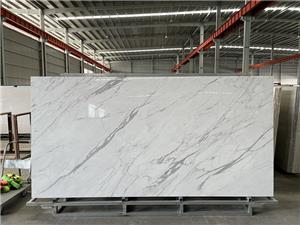
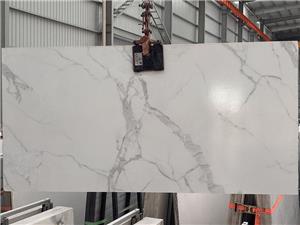
Marble-look options—such as Taj Mahal sintered stone—combine refined aesthetics with performance quartz cannot match under heat and UV exposure.
Which Should You Choose?
Choose quartz countertops if:
Your kitchen use is light
You rarely cook with high heat
Your space has minimal sunlight
Budget is the primary concern
Choose sintered stone countertops if:
You cook frequently
You want heat and UV freedom
You value long-term performance
You want fewer usage restrictions
Final Thought: Why the Gap Matters Now
For years, quartz’s limitations were manageable.
In 2026 kitchens, they’re becoming visible.
As kitchen design evolves toward:
Bigger surfaces
More sunlight
More real use
materials that tolerate mistakes—not just ideal conditions—will continue to gain ground.
Next Steps
To explore performance-driven options:
View Sintered Stone Kitchen Countertops
Review marble-look designs such as Taj Mahal Sintered Stone
Request samples or technical specifications for your project
Choosing the right material today means fewer compromises tomorrow.