
Snow White Sintered Stone Bathroom Tile: Design and Project Guide
Selecting Snow White sintered stone for a bathroom project involves more than choosing a white surface that matches the design scheme. Contractors and project procurement teams also need to confirm whether the selected material is appropriate for each installation area, whether the required formats and finishes are available, and whether the supplier can coordinate quantities and deliveries across the project.
These decisions are particularly important when a project includes several bathrooms or multiple installation phases. A material selected for a vanity wall, for example, should not automatically be specified for a shower floor. Each application has different technical and installation requirements.
For project buyers considering Snow White sintered stone, the following points provide a practical framework for evaluating the material and preparing a quotation request.
Snow White Sintered Stone in Different Bathroom Applications
A bathroom may include wall surfaces, general flooring, shower areas, and vanity surrounds. Although these areas may use a coordinated material palette, they should not necessarily share the same product specification.
Bathroom walls and feature walls
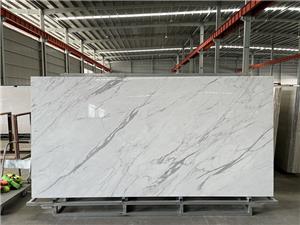
Walls are often a starting point when considering a Snow White surface. A consistent white appearance can help create visual continuity across a bathroom, while larger panels may reduce the number of visible joints where the product format and installation conditions allow.
For procurement, the important questions are whether the selected product is available in the required dimensions and thickness, whether its weight and handling requirements suit the installation, and whether the proposed fixing system is compatible with the substrate. These details should be reviewed before the material is approved.
General bathroom floors
Floor applications require a separate assessment. The surface finish, slip-resistance evidence, expected use, drainage conditions, and applicable project requirements all need to be considered.
Do not assume that a finish selected for wall cladding is suitable for bathroom flooring. Before specifying the material, request product-specific test information and confirm that the proposed surface meets the requirements established by the project team and applicable local codes.
Shower walls and floors
Shower installations require particular attention to the complete installation system. The selected surface is only one part of the assembly; waterproofing, substrate preparation, drainage, joints, and installation details also affect performance.
Shower walls and shower floors should be evaluated separately. A product that may be considered for a shower wall is not automatically suitable for a shower floor, where slip resistance, slope, drainage, and format can create additional requirements.
Vanity surrounds and related surfaces
Snow White sintered stone may also be considered for vanity surrounds and adjacent surfaces, subject to the selected product's intended use and technical documentation. Buyers should confirm the required cutouts, edge details, dimensions, and coordination with basins, fixtures, and cabinetry before production.
For projects combining tile and countertop components, confirm that the selected products have an acceptable visual relationship. Similar color names do not guarantee identical appearance across different product references, finishes, or production batches.
Choosing Tile Formats and Surface Finishes for Bathroom Projects
Format and finish decisions should follow the bathroom layout and installation requirements rather than being made on appearance alone.
Standard formats and larger panels
Standard tile formats may be more practical where the layout includes numerous corners, niches, narrow sections, or changes in wall direction. Larger panels can create a more continuous visual surface and reduce the number of joints, but they may require more careful handling, access planning, substrate preparation, and installation coordination.
The appropriate choice depends on the drawings, room dimensions, access conditions, installer experience, and the formats the supplier can actually provide. Buyers should submit the intended layout before confirming the material order.
Surface finish by installation area
Finish selection should be based on the intended application and supporting product data. A polished appearance may be considered for certain wall or vanity applications, while floor and shower areas require particular attention to slip-resistance requirements and cleaning conditions.
Avoid selecting a finish solely from a showroom sample or product photograph. Request a physical sample of the proposed product and finish, then evaluate it under suitable lighting and against the project's other specified materials.
Joint layout and visual coordination
Tile dimensions, joint positions, corners, niches, fixtures, and transitions should be coordinated on the project drawings. This is especially important when larger formats are used or when the same material is intended to continue across several bathroom surfaces.
The procurement package should identify the intended layout and any critical visual requirements. This gives the supplier and installer a clearer basis for reviewing quantities, cuts, and material availability before the order is finalized.
Technical Requirements to Confirm Before Material Approval
Before approving a Snow White sintered stone product for a bathroom project, procurement teams should obtain documentation relevant to the actual installation areas. A general product description is not a substitute for technical evidence.
The review should cover the following items where applicable:
Water absorption and related product data: Request the manufacturer's available test results and confirm whether they meet the project's material specification.
Slip resistance: For floors and shower floors, request test documentation for the exact product and finish. Confirm the test method and acceptance criteria with the project specifier rather than relying on an unqualified claim that a surface is slip-resistant.
Surface and chemical resistance: Check whether relevant test information is available for the expected cleaning products, bathroom chemicals, and service conditions.
Dimensions and thickness: Confirm the actual available dimensions, thickness, dimensional tolerances, and any project-specific cutting requirements.
Installation instructions: Obtain the manufacturer's current recommendations for substrate preparation, adhesive or fixing systems, joint treatment, handling, and maintenance.
System compatibility: Have the project team or qualified installer review the compatibility of the material with the waterproofing system, substrate, fixing method, and other components.
Requirements can differ between wall, floor, and shower applications. Where a specification or test result is unclear, resolve it before material approval rather than assuming that one document covers every installation area.
Quantity Planning, Material Consistency, and Project Delivery
Accurate quantity planning helps reduce avoidable changes after the order is placed. For bathroom projects, calculations should be based on the actual drawings and installation areas rather than a general allowance applied to every room.
Start by separating the quantities for walls, floors, shower areas, and vanity-related components. Account for doors, windows, niches, plumbing openings, corners, and other details that affect the usable material area. Any cutting or waste allowance should reflect the selected format and approved layout; it should not be treated as a universal percentage.
Material approval should also be tied to a clear product reference and an approved sample. For projects involving multiple bathrooms or delivery phases, confirm how the supplier will identify the selected product, finish, and relevant batch information. If visual consistency is important across phases, discuss the supply plan before placing the initial order.
Delivery coordination deserves the same attention as material selection. Buyers should confirm packaging requirements, labeling, quantities by room or installation area, delivery sequence, and the receiving arrangements at the project site. Where the site has limited storage or restricted delivery access, communicate those conditions when requesting the quotation.
These details help the supplier assess the project more accurately and allow the contractor to coordinate material arrival with installation progress.
Preparing a Project Quotation Request
A project quotation request should give the supplier enough information to assess the material requirements and identify questions that need to be resolved before pricing.
For a Snow White sintered stone bathroom project, prepare the following information where available:
Project location and type, such as a hotel, apartment development, or renovation.
Bathroom drawings or tile layout plans, including the areas where the material will be installed.
Intended applications, separated into walls, general floors, shower walls, shower floors, and vanity-related surfaces.
Required dimensions, thicknesses, finishes, and estimated quantities.
Relevant technical specifications, test requirements, or approval documents.
Sample requirements and the expected material approval process.
Target delivery dates, delivery phases, packaging requirements, and site access conditions.
If some specifications have not yet been finalized, identify them as pending rather than making assumptions. The supplier can then distinguish confirmed requirements from items that need technical review or product availability checks.
Providing drawings and application details at the quotation stage is particularly useful when the project includes several formats, different installation areas, or phased deliveries. It gives both parties a more reliable basis for discussing product selection, quantities, documentation, and supply arrangements.
Plan Your Snow White Bathroom Tile Project
A successful bathroom material package depends on more than appearance. The selected product must be assessed for each intended application, supported by appropriate technical documentation, coordinated with the installation drawings, and planned around the project's quantity and delivery requirements.
If you are sourcing Snow White sintered stone for a bathroom development or renovation, request a project quote with your drawings, application areas, estimated quantities, and technical requirements. These details will help us review the project scope and identify the product information and supply details that need to be confirmed before an order is placed.