
Why Designers Are Switching to Silica-Free Green Countertops After the Quartz Crackdown
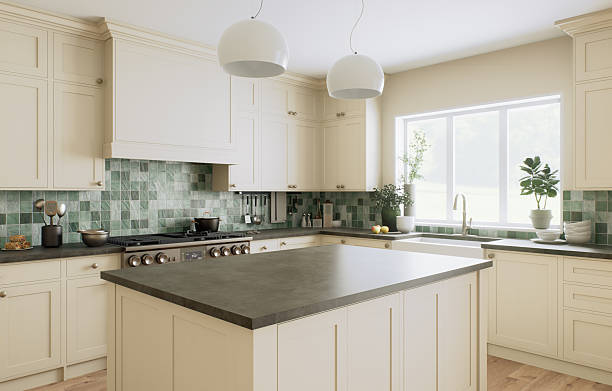
The countertop industry is undergoing a quiet but consequential metamorphosis. For years, engineered quartz occupied an almost untouchable position within modern kitchen design—praised for its polished uniformity, durability, and aspirational appeal. Yet beneath the immaculate surfaces, a far more contentious narrative has begun to unfold. Escalating scrutiny surrounding crystalline silica exposure, particularly during fabrication and installation, has unsettled architects, manufacturers, and stone professionals across global markets. Regulatory pressure is tightening. Fabricators are reconsidering long-standing material preferences. Designers are searching for alternatives that feel both elevated and future-facing.
Into this shifting landscape arrives a material category that seems uncannily aligned with the moment: green sintered stone.
Its ascent is not accidental. It is the convergence of aesthetics, environmental consciousness, and industrial evolution. Rich emerald veining, forest-toned mineral patterns, and deep botanical palettes are rapidly replacing the sterile monochrome kitchens that dominated the previous decade. Contemporary interiors are gravitating toward atmosphere rather than austerity. Texture over uniformity. Organic resonance over synthetic perfection.
At the same time, sintered stone has emerged as a compelling response to the industry’s growing demand for lower-silica and silica-free surfacing solutions. Manufactured through extreme heat and pressure, these ultra-compact surfaces deliver remarkable resilience while offering the visual drama traditionally associated with rare natural marble. The result is a new design language—one that merges safety considerations with sculptural luxury.
Green sintered stone now occupies a rare position within architectural design: it satisfies regulatory anxieties without sacrificing visual ambition. In many respects, it represents more than a countertop trend. It signals a broader recalibration of how luxury materials are selected, specified, and experienced in the post-quartz era.
Why Green Countertops Are Trending
Interior design is moving away from sterile perfection. The era of uninterrupted white kitchens and glacial gray minimalism is gradually receding, replaced by spaces that feel atmospheric, tactile, and emotionally resonant. Within this evolution, green countertops have emerged as one of the most compelling design movements in contemporary architecture.
The shift is deeply connected to the rise of biophilic interiors. Designers are increasingly drawing inspiration from landscapes, mineral formations, forests, and organic textures in an effort to create environments that feel restorative rather than clinical. Green surfaces evoke a sense of grounded sophistication. They soften hard architectural lines and introduce chromatic depth without overwhelming a space.
Luxury hospitality has accelerated this transition dramatically. High-end hotels, boutique resorts, and wellness retreats have embraced emerald-toned stone surfaces as part of a broader sensory design philosophy. Marble-inspired green slabs now appear in tranquil spa bathrooms, sculptural reception desks, cocktail lounges, and expansive suite kitchens. Residential interiors inevitably follow where hospitality aesthetics lead.
The allure lies partly in the material’s visual complexity. Emerald veining, moss-like undertones, and deep mineral pigmentation create a moody opulence that feels simultaneously ancient and contemporary. Unlike flat monochromatic surfaces, green stone possesses movement. It changes character under shifting light conditions, producing a subtle theatricality throughout the day.
Darker natural palettes are also becoming synonymous with modern luxury. Forest green, basalt, smoked walnut, and oxidized bronze tones are replacing the bright austerity that dominated the previous decade. These palettes feel more curated. More architectural. More enduring.
At the same time, green has evolved into a symbolic color within sustainable design language. It quietly communicates environmental awareness, longevity, and material intentionality. In many projects, green countertops function not merely as decorative elements, but as visual declarations of a broader ecological sensibility.
The result is a design movement that feels less trend-driven and more cultural—a recalibration toward interiors that prioritize atmosphere, material authenticity, and emotional permanence.
Why Sintered Stone Fits Both Trends
Few materials have arrived at such an opportune cultural intersection as sintered stone. At a moment when the design industry is simultaneously confronting health concerns, sustainability expectations, and evolving aesthetic preferences, this ultra-compact surface has emerged as an unusually persuasive solution. It satisfies technical scrutiny without sacrificing visual grandeur. More importantly, it bridges two seemingly disparate demands: conscientious material selection and uncompromising luxury.
Its growing relevance begins with composition.
Unlike many engineered quartz products associated with elevated crystalline silica content, certain sintered stone surfaces are manufactured with significantly lower silica formulations or entirely silica-free compositions. This distinction has become increasingly consequential as architects, developers, and fabrication workshops reassess material safety standards under mounting regulatory pressure. In an industry once dominated by visual appeal alone, specification decisions are now influenced by occupational health considerations as well.
Yet sintered stone has not gained momentum merely because it addresses a problem. It is succeeding because it also delivers aspiration.
The material possesses extraordinary resistance to ultraviolet exposure, allowing richly pigmented surfaces to retain chromatic integrity even under relentless sunlight. This capability radically expands design possibilities. Deep emerald countertops can flow seamlessly from interior kitchens to exterior culinary terraces without fading into pallid imitations of their original tone. Few surfacing materials maintain such continuity between indoor refinement and outdoor resilience.
Performance extends further still.
Sintered stone is remarkably resistant to staining due to its dense, nearly non-porous structure. Wine, citrus, oils, coffee, and cosmetic products remain largely superficial rather than penetrating the surface. In practical terms, this translates into a quieter form of luxury—one rooted not in fragility, but in ease. The material accommodates daily life without demanding obsessive maintenance rituals or chemical-intensive upkeep.
This low-maintenance character has become particularly attractive within contemporary architectural culture, where permanence increasingly outweighs novelty. Designers and homeowners alike are gravitating toward surfaces that age gracefully rather than require constant preservation. Sintered stone aligns perfectly with that philosophy. It is durable without appearing industrial. Sophisticated without becoming delicate.
Perhaps most compelling, however, is the extraordinary realism now achievable within modern sintered stone manufacturing. Advances in digital veining technology and high-definition mineral replication have enabled surfaces that evoke the visual drama of rare natural marble with startling fidelity. Verdant veining reminiscent of Verde Alpi or rainforest quartzite can now be reproduced across expansive slabs with remarkable nuance and continuity.
The effect is deeply atmospheric. Emerald undertones ripple beneath matte finishes. Mineral striations appear sedimentary and organic rather than artificially repetitive. Some slabs possess a moody chiaroscuro quality that transforms dramatically under changing light conditions throughout the day.
This convergence of realism and resilience explains why green sintered stone has become particularly resonant in luxury interiors. It delivers the sculptural beauty traditionally associated with exotic natural stone while eliminating many of the vulnerabilities that once accompanied such materials.
In many respects, sintered stone represents the architectural temperament of the present era: health-conscious yet visually ambitious, technically advanced yet emotionally tactile, sustainable yet unapologetically luxurious. It is no longer simply an alternative surface material. It is increasingly becoming the material through which contemporary design negotiates the future.
Best Green Silica-Free Materials
The pursuit of green countertops has evolved beyond aesthetic preference. It now exists at the convergence of health consciousness, regulatory adaptation, and material innovation. Within this shifting terrain, silica-free or low-silica surface materials have gained prominence not as niche alternatives, but as strategic design choices. Each category offers its own temperament—its own balance of resilience, visual language, and architectural applicability.
Green Sintered Stone
Green sintered stone occupies the apex of this emerging material hierarchy. Forged through extreme heat and compression, it achieves a dense, vitrified structure that is often formulated with reduced or negligible crystalline silica content depending on manufacturer composition.
Its defining strength lies in synthesis: performance fused with aesthetic depth. Emerald veining, jade-like translucency, and volcanic green tonalities are rendered with striking realism. Yet beneath the visual complexity lies a surface engineered for endurance. It resists thermal shock, UV degradation, and chemical staining with composed indifference.
There is a quiet sophistication in its versatility. Kitchen islands become monoliths. Bathroom surfaces become geological statements. Outdoor kitchens maintain chromatic consistency under open skies. Few materials transition so fluidly across environmental thresholds.
Porcelain Slabs
Porcelain slabs represent the architectural ancestor of sintered innovation. Composed primarily of refined clays and minerals, they are fired at similarly high temperatures, resulting in a compact, low-porosity surface.
In green applications, porcelain tends to express a slightly more graphic aesthetic—bold veining, stylized mineral patterns, and high-definition print fidelity. While some formulations contain silica, many modern variants reduce exposure risk through controlled processing and encapsulation techniques.
Their greatest advantage is adaptability. Lightweight relative to natural stone, porcelain slabs are favored for vertical installations, façades, and expansive interior cladding where structural efficiency matters as much as visual impact.
Recycled Surfaces
Recycled surface materials represent the most experimental frontier within this category. Composed of post-industrial glass, ceramics, stone fragments, or composite binders, they introduce an ecological dimension to the conversation.
Green variants in this segment often exhibit a mosaic-like complexity—flecked, layered, and texturally unpredictable. Their appeal lies not in perfection but in provenance. Each surface carries a visual record of material reincarnation.
While performance varies widely depending on composition, their symbolic value is significant. They represent a circular design ethos where material luxury is redefined through sustainability rather than rarity.
Together, these materials form a spectrum rather than a hierarchy. From highly engineered sintered stone to experimental recycled composites, each offers a distinct interpretation of what a green, silica-conscious surface can become. The result is not uniformity, but a diversified material ecology—one where design intent, performance demands, and environmental awareness converge into a richer architectural vocabulary.
Applications
The true measure of green sintered stone is not found in material specifications or technical datasheets alone. It is revealed in application—where surface becomes structure, and design intention crystallizes into lived experience. Across contemporary architecture, this material is no longer confined to countertops. It has expanded into a spatial language of its own.
Luxury Kitchens
In luxury kitchens, green sintered stone assumes the role of focal gravity. It anchors the room with a quiet, geological confidence. Emerald tones soften modern minimalism, introducing depth where sterile whites once dominated. Cabinetry recedes. Lighting becomes sculptural. The countertop transforms into a central artifact—both functional and expressive.
There is a distinct shift here: kitchens are no longer utilitarian zones but curated environments of ritual and display.
Waterfall Islands
Waterfall islands elevate the material into monolithic expression. The surface cascades vertically, uninterrupted, forming a continuous veil of stone-like elegance. Green veining becomes architectural rhythm, flowing from horizontal plane to vertical descent.
The effect is immersive. Almost cinematic. A singular slab that feels carved rather than assembled.
Spa Bathrooms
Within spa bathrooms, green sintered stone introduces a sense of mineral serenity. Its cool surface palette echoes natural springs, shaded forests, and volcanic stone basins. Steam, water, and stone converge into a sensory triad.
The result is atmospheric calm—spaces designed not merely for hygiene, but for psychological decompression.
Outdoor Kitchens
Outdoor kitchens demand resilience, and here green sintered stone performs with composure. UV exposure, temperature fluctuation, and environmental moisture do not compromise its integrity. Instead, the material maintains chromatic depth under open skies.
Emerald surfaces against natural light create a compelling contrast—lush, grounded, and enduring. It is where landscape and architecture begin to blur.
Wellness Hospitality
In wellness-driven hospitality design, from boutique resorts to high-end spas, green sintered stone functions as a material of emotional engineering. It aligns with biophilic principles, reinforcing human connection to natural palettes and organic textures.
Reception counters, treatment rooms, and relaxation lounges gain a tactile calmness. The material does not demand attention—it absorbs it.
Feature Walls
As feature walls, green sintered stone becomes purely sculptural. Vertical surfaces transform into geological canvases—layered, veined, and dramatically lit. The stone ceases to be background and becomes narrative architecture.
In lobby spaces, private residences, and gallery-like interiors, these walls establish identity. They are not decorative additions, but architectural statements carved in mineral silence.
Across all applications, green sintered stone demonstrates a rare versatility. It adapts without dilution, transforms without losing identity. Whether horizontal or vertical, interior or exterior, intimate or monumental, it consistently translates material into atmosphere—and atmosphere into experience.
FAQ
Are sintered stone countertops silica-free?
Sintered stone is often marketed as a low-silica or silica-free alternative, though composition varies by manufacturer and formulation. Many advanced ultra-compact surfaces significantly reduce crystalline silica content compared to engineered quartz, particularly in products designed under newer safety-driven standards. The key distinction lies not only in absence, but in reduction—minimizing airborne exposure during fabrication while maintaining structural density and durability.
Is green porcelain cheaper than marble?
In most cases, yes. Green porcelain and sintered stone surfaces generally sit below high-end natural marble in both material and long-term maintenance cost. While premium designer slabs can elevate pricing, they eliminate quarrying rarity premiums and reduce upkeep expenses associated with sealing and restoration. The result is a more predictable, controlled investment.
Can green countertops be used outdoors?
Absolutely. One of the defining strengths of sintered stone and porcelain is their environmental resilience. UV stability, frost resistance, and minimal water absorption make them particularly suitable for outdoor kitchens, façades, and landscape-integrated surfaces. Green tones remain visually stable under prolonged sun exposure, preserving their mineral richness without fading.
What is the safest countertop material?
Safety depends on context, but materials with low or negligible crystalline silica content—such as certain sintered stone, porcelain slabs, and recycled composites—are increasingly considered among the safer options. The most responsible choice balances fabrication safety, long-term durability, and environmental performance, rather than relying on aesthetics alone.
The evolution of surface design is no longer a distant trend—it is unfolding now, reshaping how materials are selected, specified, and experienced. Green sintered stone stands at the intersection of safety, durability, and sculptural beauty, offering a new vocabulary for modern interiors and architectural spaces.
For projects seeking depth, resilience, and a distinctly contemporary aesthetic, exploration begins with informed material selection. The next space you design deserves more than convention—it deserves intention, texture, and permanence woven into every surface plane.
Discover how green silica-conscious surfaces can redefine your next architectural vision.