
5 Costly Mistakes Buyers Make When Ordering White Sintered Stone Slabs
Most problems with white sintered stone don’t start after installation.
They start much earlier—during selection, specification, and ordering.
On the surface, the material itself is reliable. But in real projects, issues tend to come from decisions that seemed reasonable at the time: choosing based on a sample, assuming all finishes perform the same, or overlooking how slabs are supplied in bulk.
Individually, these decisions don’t look like risks. But combined, they can lead to visible problems, delays, or additional cost—especially with white materials, where expectations are higher and mistakes are easier to see.
Mistake 1: Choosing Based on a Sample Only
Samples are useful—but they’re also misleading if taken too literally.
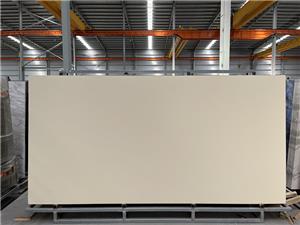
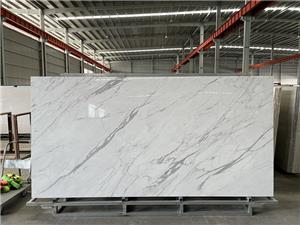
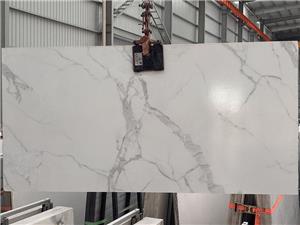
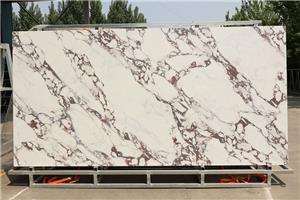
A small piece of white sintered stone, viewed under controlled lighting, doesn’t fully represent how the material will look across a full slab, or across an entire space. Differences in scale, veining distribution, and even surface reflection become more noticeable once the material is installed.
Lighting also plays a role. What appears clean and uniform in a showroom may look different under natural light, warm interior lighting, or mixed conditions on-site.
In one residential project, a buyer approved a white slab based on a small sample with subtle veining. When the full slabs were installed, the pattern appeared much more prominent than expected. The material itself was consistent—but the expectation was based on an incomplete reference.
The issue wasn’t quality. It was scale.
Mistake 2: Ignoring the Impact of Surface Finish
Finish is often treated as a design decision. In practice, it’s also a performance decision.
Polished white surfaces tend to be easier to clean and less likely to hold onto residue. Matte or textured finishes can offer a more natural look, but they behave differently in daily use—especially in environments where oil, dust, or frequent handling are involved.
This doesn’t mean one finish is better than the other. It means the choice needs to match the application.
In several projects, what was initially described as “staining” on matte white surfaces turned out to be surface buildup rather than material failure. Once cleaning methods were adjusted, the issue improved—but it highlighted how finish selection affects maintenance.
Mistake 3: Not Considering Where the Material Will Be Used
The same slab can perform very differently depending on its environment.
White sintered stone works well in many applications, but expectations need to align with usage conditions. A material that performs well on a bathroom wall may behave differently as a kitchen countertop, and differently again in a commercial setting.
Problems tend to appear when the decision is driven purely by appearance, without considering how the surface will actually be used day to day.
For example, specifying a matte white finish for a high-traffic kitchen may create unnecessary maintenance challenges. The material itself remains durable—but the visual upkeep becomes more demanding.
Mistake 4: Overlooking Batch Consistency in Larger Orders
This is one of the most common issues in bulk projects—and one that is often underestimated.
White materials, in particular, are sensitive to variation. Even small differences between production batches can become noticeable when slabs are installed side by side.
In single orders, this is usually manageable. In multi-phase projects or large-volume orders, it becomes more complex.
There have been cases where additional slabs were ordered later to complete a project, only to find slight differences in tone or finish compared to the original batch. The variation was within normal manufacturing tolerance—but visually, it created inconsistency.
Experienced buyers often plan for this in advance by securing sufficient material from the same batch or allowing for controlled variation in design.
Mistake 5: Underestimating Installation Requirements
Installation is where many assumptions are tested.
White sintered stone is dense, rigid, and less forgiving than some alternative materials. This affects how it is cut, handled, and finished on-site.
Thickness, edge treatment, and cutting complexity all influence how the material behaves during installation. Small inaccuracies—whether in leveling, alignment, or finishing—are more visible on white surfaces.
In one mid-scale project, delays occurred not because of material supply, but because installation teams needed additional time to adjust cutting and finishing methods. The original schedule assumed standard processing conditions, which didn’t fully apply.
This is a common pattern. The material performs well—but only when installation is aligned with its characteristics.
What Tends to Go Wrong in Bulk Orders
When projects involve larger volumes, small issues become more visible.
Patterns that appear repeatedly include:
a. expectations based on samples rather than full slabs
b. finish choices that don’t match usage conditions
c. batch variation across multiple shipments
d. installation adjustments that weren’t anticipated
None of these are unusual on their own. But in combination, they can affect both cost and outcome.
What stands out is that most of these issues are preventable—not through major changes, but through clearer decisions early in the process.
Final Thought
White sintered stone is not a difficult material to work with—but it is a material that requires alignment between expectation and execution.
Most costly mistakes don’t come from the product itself. They come from how it’s selected, specified, and implemented.
If you're planning a bulk order, reviewing specifications in advance—especially finish, application, and batch planning—can prevent adjustments that are far more difficult to make later.