
How We Manufacture Sintered Stone Worktops for Export Markets
Sintered stone worktops have rapidly become a preferred surface material across global residential, commercial, and hospitality projects. Their strength, low porosity, heat resistance, and premium aesthetics make them an ideal choice for modern interior applications.
However, for international buyers, product quality alone is not enough.
Consistency, fabrication precision, export-grade packaging, and reliable delivery all determine whether a supplier is truly capable of supporting overseas projects at scale.
This article explains the complete manufacturing process behind export-ready sintered stone worktops—from slab selection to final shipment—highlighting the systems that ensure every order meets international expectations.
Why Manufacturing Quality Matters for Export Markets
The Real Challenges in Global Sourcing
Sourcing sintered stone worktops internationally involves multiple risks. Products must survive long-distance shipping, multiple handling stages, and varying installation environments.
Even small inconsistencies can lead to:
Misaligned installations on site
Visible color variation across batches
Edge defects affecting aesthetics
Breakage during transit
For importers, reliability is not optional. It is essential.
What Global Buyers Expect from a Supplier
A true export-ready manufacturer must consistently deliver:
Dimensional precision across all units
Stable color and surface consistency
Flexible OEM and customization capability
Strict quality inspection systems
Export-safe packaging solutions
On-time production and shipping control
These expectations define whether a supplier can support long-term international partnerships.
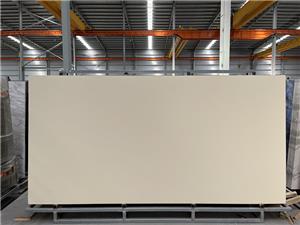
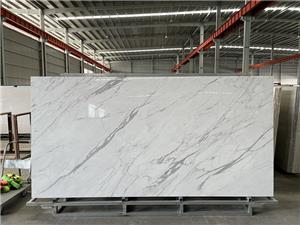
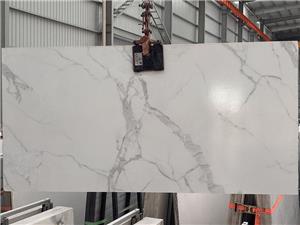
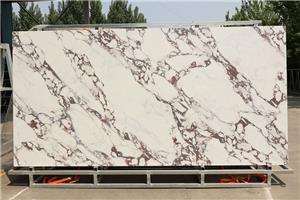
Step 1: Premium Slab Selection for Stable Quality Output
Selecting High-Performance Sintered Stone Materials
Every worktop begins with the slab.
Sintered stone is engineered under extreme heat and pressure using natural minerals, resulting in a highly durable and non-porous surface. However, not all slabs meet export-grade standards.
Only slabs that demonstrate:
Stable color performance
Structural integrity
Uniform texture distribution
Consistent thickness tolerance
are selected for production.
Pre-Production Material Evaluation
Before cutting begins, each slab undergoes inspection for:
Surface defects or imperfections
Pattern alignment suitability
Batch consistency
Technical performance compliance
This step ensures downstream stability across large export orders.
Step 2: Production Planning and Precision Layout Design
Translating Customer Requirements into Manufacturing Data
Each project begins with technical interpretation of:
CAD drawings
Installation layouts
Custom dimensions
Quantity breakdowns
Precision planning eliminates production uncertainty and reduces material waste.
Optimized Cutting Layout Strategy
Advanced nesting systems are used to:
Maximize slab utilization
Preserve design continuity
Reduce offcut waste
Improve production efficiency
This stage directly impacts both cost control and final product consistency.
Step 3: CNC Precision Cutting and Fabrication
Industrial-Grade CNC Manufacturing
CNC equipment ensures every cut is executed with high dimensional accuracy. Compared to manual fabrication, CNC systems deliver:
Repeatable precision
Tight tolerance control
Faster production cycles
Lower error rates
This is essential for export projects where installation depends on exact specifications.
Custom Fabrication Capabilities
Export markets demand flexibility. Common fabrication services include:
Sink cutouts (undermount / top mount)
Hob and cooktop openings
Tap and fixture drilling
L-shaped and island configurations
Special architectural shapes
Each unit is produced according to project-specific requirements.
Step 4: Edge Profiling and Surface Finishing
Professional Edge Processing Options
Different markets require different visual finishes. Common edge profiles include:
Straight polished edge for modern interiors
Beveled edge for subtle detailing
Mitred edge for thick luxury appearances
Waterfall edge for premium island designs
Precision edge finishing enhances both aesthetics and structural integrity.
Surface Finishing and Refinement
After fabrication, each piece undergoes:
Edge smoothing and calibration
Surface cleaning and correction
Final visual inspection under controlled lighting
The goal is consistency across every exported unit.
Step 5: Multi-Stage Quality Control System
Incoming Material Inspection
Before production begins, slabs are checked for:
Color consistency
Surface defects
Structural irregularities
Only approved materials proceed to manufacturing.
In-Process Quality Monitoring
During production, continuous checks ensure:
Dimensional accuracy
Cutting precision
Fabrication alignment
Surface integrity
Early detection prevents production defects from escalating.
Final Pre-Shipment Inspection
Before packaging, each worktop is reviewed for:
Overall workmanship
Edge and surface quality
Cutout precision
Dimensional compliance
Only fully approved products proceed to export packing.
Step 6: OEM and Private Label Manufacturing for Global Brands
Supporting International Brand Development
OEM services allow distributors and retailers to launch products under their own brand identity.
This includes:
Custom specifications and dimensions
Branding and labeling options
Product identification systems
Tailored packaging solutions
Flexible Production for Diverse Markets
Manufacturing systems support a wide range of requirements:
Multiple thickness options
Various finishes and textures
Market-specific sizing standards
Project-based customization
This flexibility is essential for global supply chains.
Step 7: Export-Grade Packaging for Safe Transportation
Why Packaging Defines Export Success
Even high-quality fabrication can fail in transit without proper protection. Export shipments must withstand:
Long-distance sea freight
Multiple loading cycles
Warehouse handling
Container movement
Multi-Layer Protection System
Each worktop is secured using:
Shock-absorbing foam layers
Reinforced edge protection
Heavy-duty wooden crates
Moisture-resistant wrapping
The objective is simple: zero damage upon arrival.
Step 8: Container Loading and Export Coordination
Professional Loading Procedures
Proper loading ensures product stability during transit.
Key principles include:
Balanced weight distribution
Secure positioning of crates
Movement prevention measures
Efficient space utilization
Experienced loading teams reduce transport risk significantly.
Export Documentation and Logistics Support
To ensure smooth delivery, shipments include:
Commercial invoices
Packing lists
Product specifications
Export coordination documents
Clear documentation supports faster customs clearance.
Consistency Across Large-Scale Export Orders
Standardized Manufacturing Systems
Large projects require repeatable quality. Standardized processes ensure:
Uniform production output
Stable material performance
Controlled fabrication accuracy
Batch Quality Control
For multi-shipment orders, consistency is maintained through:
Color matching systems
Surface uniformity checks
Dimensional calibration
Production record tracking
This guarantees uniformity across all deliveries.
Why Global Buyers Partner with Export-Ready Manufacturers
Engineering-Driven Production Capability
Advanced CNC systems and skilled technicians ensure precise execution at every stage.
Proven Export Experience
Understanding international logistics, packaging requirements, and compliance standards ensures smooth cross-border transactions.
Integrated Quality Assurance
Quality control is embedded throughout the entire process—not limited to final inspection.
This reduces risk and improves long-term reliability for buyers.
Frequently Asked Questions
How are sintered stone worktops manufactured?
They are produced through slab selection, CNC fabrication, edge finishing, quality inspection, and export packaging under controlled manufacturing systems.
Can sintered stone worktops be customized for OEM orders?
Yes. Custom dimensions, finishes, cutouts, branding, and packaging can all be tailored for international clients.
What inspections are performed before export?
Each product undergoes dimensional checks, surface evaluation, fabrication verification, and packaging inspection.
How are worktops protected during shipping?
They are secured using foam protection, reinforced crates, and moisture-resistant packaging systems.
What is the typical production lead time?
Lead time depends on order volume and customization complexity, including fabrication, inspection, and export preparation.
Conclusion
Manufacturing sintered stone worktops for export markets requires far more than production capability. It demands precision engineering, strict quality control, and export-focused logistics systems working together seamlessly.
From slab selection to container loading, every stage plays a role in ensuring product integrity.
For international buyers, choosing a manufacturer with proven export experience significantly reduces risk and ensures consistent project success across global markets.
Request for Quotation
For OEM projects, custom worktops, or bulk export orders, detailed specifications and drawings can be submitted for evaluation. Sample production and technical consultation are available upon request.