
The First Order Looks Right. What Happens When You Need More?
The first order of sintered stone often has a clear finish line: the specification is agreed, samples are approved, production is completed, and the material arrives.
The second order is different.
A buyer may need additional slabs for a new phase, replacement material months later, replenishment for an ongoing product line, or the same surface for another project. At that point, the question is no longer simply whether the manufacturer can produce the product. It becomes whether the new material can be related reliably to the material that was already approved.
This is where sintered stone batch consistency becomes a practical procurement issue.
As large-format and visually expressive surfaces continue to feature prominently in 2026 design, the relationship between production batches, appearance, and future supply becomes more significant.
The objective is not to assume that every production run will be visually identical. Rather, it is to establish a clear reference and a controlled way to evaluate whether later material remains suitable for the intended application.
For buyers planning repeat, phased, or long-term supply, that process should begin with the first purchase.
The First Order Is Not the Same as a Repeat Order
The first order establishes what you are buying. A later order has to establish what you are buying again.
That distinction matters because a new production run may occur at a different time, under different production conditions, or after changes in manufacturing, finishing, packaging, or product availability. Even when the commercial product remains under the same name, the buyer still needs a practical basis for comparing the new material with the previously accepted material.
For a one-time project with limited visual requirements, this may have little commercial consequence. For a project using multiple phases of supply, a furniture program with recurring production, or a distributor carrying a repeatable product line, it can become much more important.
The first shipment therefore should not be treated as an isolated transaction. It can become the reference point for everything that follows.
A well-managed repeat-order process connects the new production to that earlier reference instead of relying only on the original product name.
“Same Product” Is Not Enough Information
A product name or SKU identifies the commercial product, but it may not capture every characteristic that matters when a buyer returns for another order.
The original approval may have involved a particular color appearance, surface finish, pattern distribution, vein direction, thickness, format, or other agreed characteristic. Some of these details may not be fully represented by a short product description.
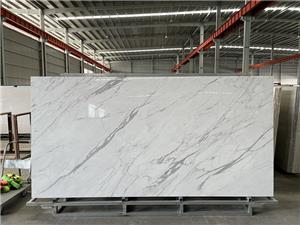
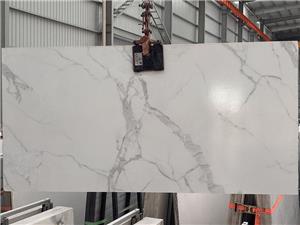
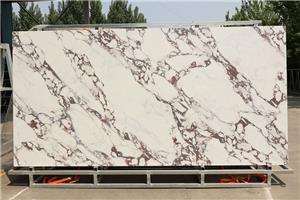
This becomes especially relevant when the surface has pronounced veining or a highly visible decorative pattern. Two slabs can belong to the same commercial product while presenting different visual relationships across a large surface.
The same issue can arise when a buyer needs only a small quantity of replacement material. The requirement may not simply be “more of the same SKU.” It may be “material that can be used alongside the material already installed.”
That is a different procurement requirement.
For repeat supply, the buyer should therefore preserve enough information to identify the approved product and the characteristics that made the original material acceptable.
The Sample You Approved Becomes a Reference, Not a Promise
A sample has an important role in material approval, but it should not be treated as a guarantee that every future slab will reproduce the sample in exactly the same way.
This is particularly relevant for large-format materials with visual variation. A small sample represents only a limited portion of a much larger surface. It may communicate the general color, finish, and design direction without showing the full range of pattern distribution across complete slabs.
For that reason, an approval process can be more useful when the sample is treated as a traceable purchasing reference rather than simply as a visual swatch. Industry guidance on batch approval similarly emphasizes identifying the approved reference and connecting it with production information rather than expecting zero variation.
Depending on the supplier and product, useful records may include the product code, thickness, finish, slab format, production or batch reference, approval date, and photographs or other visual records of the approved material.
The exact records will vary by manufacturer. The important point is that the reference should still be usable when the original sample is no longer physically available or when a different team member manages the next purchase.
The Second Order Is Where “Consistency” Becomes a Procurement Question
A buyer may not think much about batch consistency when placing the first order because there is nothing to compare it with.
The second order changes that.
Now there are two production references. The buyer may need to determine whether the new material can be used with the existing stock, installed surfaces, furniture components, or previous production.
This does not necessarily require demanding absolute visual identity. A more practical approach is to define what degree of consistency matters for the application and how the supplier will evaluate it.
For example, a replacement slab for a highly visible reception desk may require much closer visual consideration than additional material that will be installed in a separate area. Likewise, a furniture manufacturer producing the same collection repeatedly may have different continuity requirements from a contractor purchasing material for a one-time installation.
The buyer's question should therefore move from:
“Can you supply the same product again?”
to:
“Can you identify and compare the new production against the material we previously approved?”
That question creates a more useful basis for repeat procurement.
Replenishment, Replacement, and Phased Supply Are Not the Same Problem
Not every second order has the same continuity requirement.
Replenishment usually means adding stock to an existing supply program. A distributor or manufacturer may want to maintain inventory of a particular surface so that future customer orders can be fulfilled.
Phased supply means one project is being supplied across different production or delivery periods. The material may need to remain visually compatible across areas that are ultimately part of the same finished environment.
Replacement is more demanding in a different way. A damaged or missing slab may need to work next to material that was produced and installed earlier. The buyer may have less flexibility because the original material is already part of the finished application.
These situations should not be treated as interchangeable.
For replenishment, the priority may be maintaining a recognizable product specification over time. For phased projects, slab selection and production timing may need to be coordinated. For replacement material, the existing material itself becomes the comparison reference.
Clarifying the reason for the future order helps the supplier understand what “consistent” needs to mean in practical terms.
The More Visible the Pattern, the More the Reference Matters
Visual continuity becomes more sensitive when the surface itself is part of the design statement.
Large-format applications, expressive veining, bookmatched surfaces, feature walls, and prominent islands can make differences between individual slabs more noticeable. Current design coverage continues to highlight large-format and highly expressive surfaces as important visual elements, increasing the practical value of planning the material relationship rather than treating each slab as an isolated unit.
For a relatively uniform surface, a modest difference between production periods may be difficult to notice in the completed application.
A strongly patterned surface can be different. The distribution, direction, density, or character of the pattern may affect how the new slab relates to an existing one.
This is why visual records can be valuable. Photographs of approved material, full-slab references where available, and documented product information can give the supplier a much better basis for discussing a later order than a product name alone.
The requirement is not to eliminate natural or manufacturing-related variation. It is to make the relevant variation visible and manageable before the material is committed to a new application.
Keep a Record That the Next Order Can Actually Use
The most useful continuity record is not necessarily the largest one. It is the one that another purchasing or production team can understand later.
A buyer may want to preserve the original product code and specification together with the approved sample information, production reference, finish, dimensions, and relevant visual records. Where applicable, records of the original order, inspection, and shipment can provide additional context.
This is particularly useful when the next order is placed months or years later.
The person managing the replenishment may not be the person who approved the first sample. The supplier contact may have changed. The original sample may have been discarded. A project may have moved from design to procurement to installation teams.
A documented reference reduces the amount of information that has to be reconstructed from memory.
It can also make communication more precise. Instead of asking a supplier to “match the previous material,” the buyer can provide a defined reference and ask the supplier to confirm how the new production will be compared with it.
Ask the Manufacturer a Different Question the Second Time Around
The questions that matter during a repeat order are not exactly the same as those asked during initial supplier evaluation.
Instead of focusing only on whether the manufacturer can produce the product, ask how the manufacturer handles repeatability.
Questions may include:
Can the previously supplied product be identified from the original order records?
Can the new production be connected to the original product and reference?
How are production batches or manufacturing references recorded, where applicable?
Can the supplier provide current material images or production references for comparison?
What happens if the original surface is no longer produced?
Can the supplier distinguish between a normal production variation and a material that is no longer commercially comparable?
If the order is phased, how should production and delivery be coordinated?
What information should the buyer retain for future replenishment or replacement?
The exact answers will depend on the manufacturer's production and documentation system. The value of these questions is that they move the conversation beyond a simple promise of “same product” toward a process for maintaining supply continuity.
Long-term supplier guidance in the industry also commonly treats repeat orders, replenishment, and replacement as issues that benefit from an established reference and ongoing communication rather than from the original order alone.
When the Original Material Is No Longer Available
There is another possibility that buyers sometimes overlook: the original material may not be available when the next order is placed.
A product can be discontinued, reformulated, renamed, replaced by another design, or otherwise become unavailable. The original supplier may also no longer carry the exact production reference.
At that point, the problem changes from repeat supply to replacement sourcing.
The buyer may need to determine whether a newer product is sufficiently compatible for the intended application. This is where the original documentation becomes particularly useful. Without a clear record of what was previously approved, it is much harder to explain what the replacement material needs to match.
For visible installations, the replacement may need to be evaluated against the existing surface rather than against a generic catalog image.
For distributors or manufacturers, a discontinued product can also create an inventory and customer-service issue. A documented alternative specification can help determine whether a substitute should be treated as a new product or as a replacement option.
The earlier the continuity requirement is documented, the easier this decision becomes later.
Build Continuity Into the First Purchase
The best time to plan for the second order is before the first one is finished.
If a project, product line, or distribution program is likely to require future supply, the initial purchase should establish more than the immediate quantity.
The buyer can clarify which characteristics must remain consistent, identify the approved reference, retain relevant production information, and ask the supplier how later orders will be connected to the original material.
This does not mean every order needs a complicated quality-control system. The level of documentation should match the commercial risk.
A one-time low-visibility application may require little beyond the normal product specification.
A multi-phase commercial project, recurring furniture program, distributor inventory, or replacement-sensitive installation may justify a much stronger continuity record.
The key is to decide this before the first order becomes history.
Once the first material has been installed or distributed, recreating its exact reference can be considerably more difficult.
The Real Test Comes After the First Order
A successful first shipment demonstrates that a supplier can deliver a particular product at a particular point in time.
It does not automatically answer the question that matters later:
Can the same approved material be sourced again with a clear basis for comparison?
That is the practical meaning of sintered stone batch consistency for repeat procurement.
The objective is not to assume that every production run will be identical. It is to establish a documented reference, understand the continuity requirement, and give both buyer and manufacturer a practical way to evaluate later production.
For businesses purchasing sintered stone repeatedly, that distinction can affect project coordination, inventory planning, replacement decisions, and customer expectations.
A repeat order should reconnect the new production to the approved reference rather than simply repeat the SKU.
When continuity is considered part of the original purchasing decision, the first order becomes more than a completed transaction. It becomes the foundation for the orders that may follow.