
Sintered Stone: Rising Costs, Policy Shifts, and the Road Ahead for Manufacturers
The sintered stone industry is navigating a pivotal moment in 2026. After years of rapid expansion, the sector now faces converging pressures—rising production costs, stricter silica regulations, and shifting trade policies—that are reshaping how sintered stone manufacturers operate and how sintered stone price is determined across global markets.
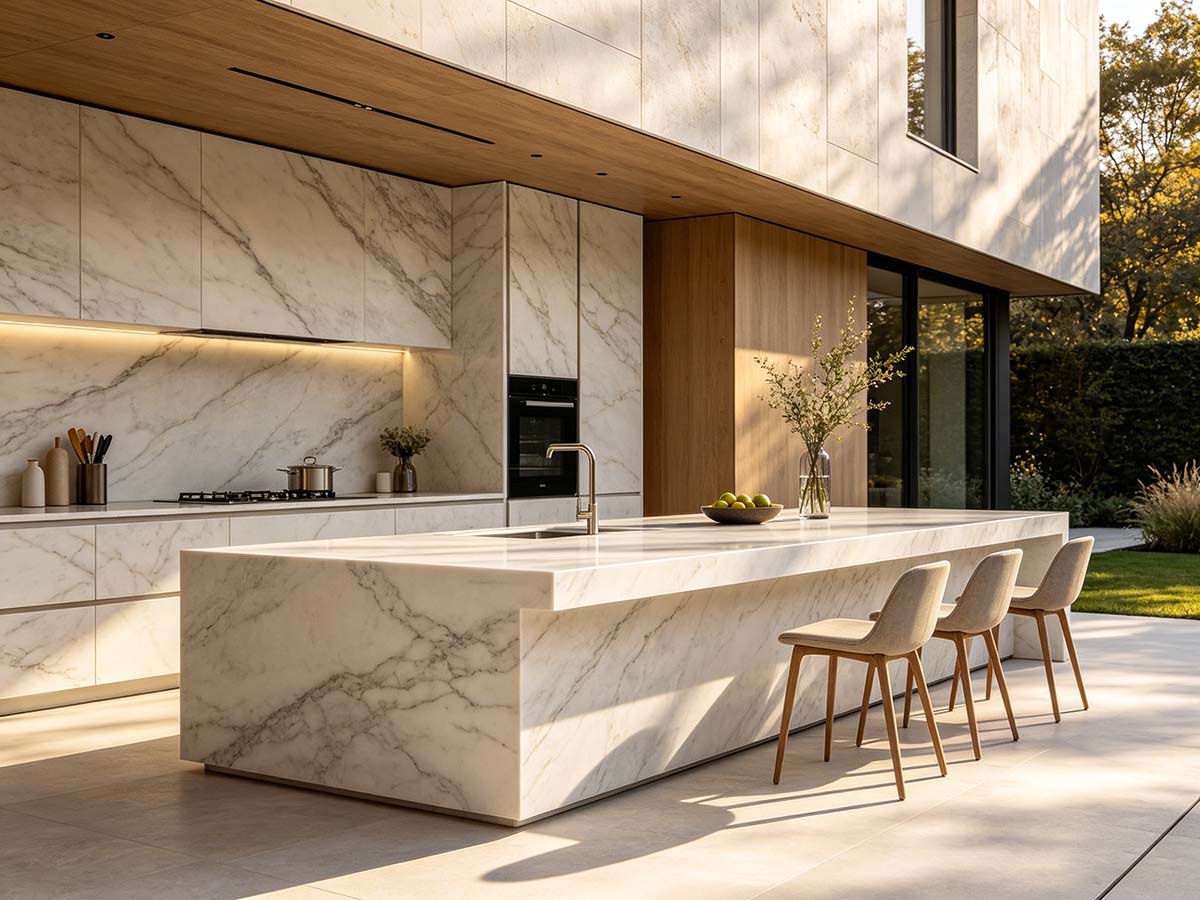
The Cost Equation: What's Driving Sintered Stone Price Upward?
For buyers and specifiers, the most visible change is in pricing. Industry data shows that installed sintered stone countertops typically range from $40 to $150 per square foot, with premium brands like Dekton and Neolith frequently falling in the $55 to $120 per square foot installed bracket. But those figures are under upward pressure.
The cost drivers are multi-layered. Fabrication alone can add $10 to $40+ per square foot, while installation—including specialist handling of large, heavy slabs—adds another $10 to $30+ per square foot. Edge profiles, sink cutouts, and waste factors (typically 5–15%) further inflate the final bill.
However, the most significant shifts in 2026 are regulatory and macroeconomic. China’s decision to end VAT export tax rebates for quartz slab exporters—effective April 1, 2026—has forced manufacturers to raise prices to maintain profitability. Combined with rising resin costs driven by Middle East oil price volatility, these factors have created a cost squeeze that is filtering through the entire supply chain.
For any serious sintered stone manufacturer, the ability to manage these cost pressures while maintaining competitive pricing has become a core competitive advantage. As one industry source notes, “even so, we are still trying to keep our competitive prices among all [stone] manufacturers”.
The Regulatory Landscape: A Tectonic Shift
Perhaps the more transformative force in 2026 is regulation. Australia’s world-first ban on engineered stone—implemented on July 1, 2024—has sent shockwaves through the industry, prohibiting the use, supply, manufacture, and installation of all engineered stone regardless of silica content.
Crucially, sintered stone sits outside this definition. The distinction between high-silica quartz and mineral surfaces like sintered stone, porcelain, and Dekton has become a defining market differentiator. These are not workarounds—they represent a different material category entirely, which is precisely what makes them the right specification choice under the new regulatory regime.
In the United States, California’s STOP Act (effective January 2026) mandates water-only cutting practices and is considering shop certifications for anyone working with engineered stone. At the federal level, OSHA’s National Emphasis Program (NEP) has brought “crushing fines and immediate shut-down orders for non-compliant shops,” making the silica rule feel entirely new to fabricators who were never previously inspected.
For sintered stone manufacturers, this regulatory environment is both a challenge and an opportunity. The compliance costs—enclosed CNCs, wet cutting cells, dust capture systems—add overhead that may be passed on to buyers, indirectly influencing sintered stone price. Yet the regulatory winds are blowing in favor of sintered stone as a safer alternative to high-silica quartz.