
Sintered Stone vs Porcelain: Key Differences, Pros, Cons, and Best Uses (2026 Guide)
Introduction
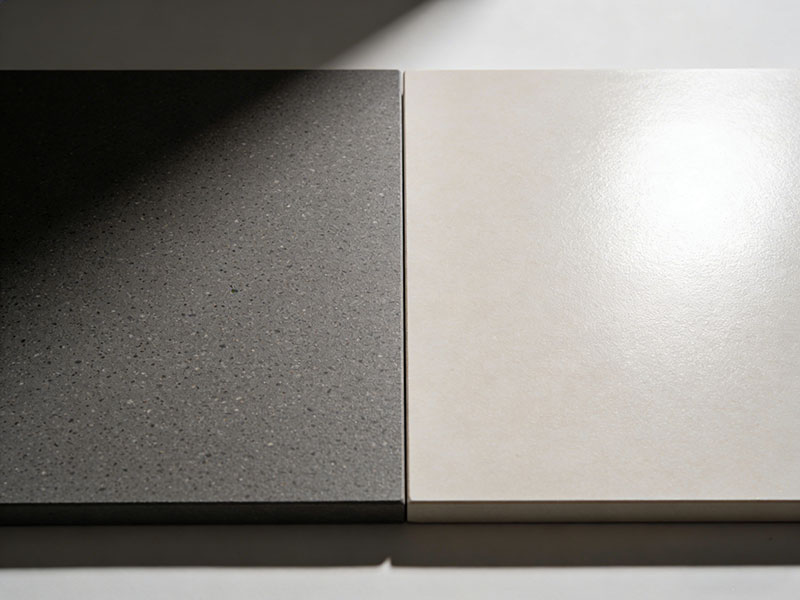
The comparison between sintered stone vs porcelain has become increasingly important in modern construction and interior design, particularly as both materials compete to replace traditional options such as natural stone and quartz surfaces. While they may appear similar at first glance, their performance characteristics, cost structures, and ideal applications differ in ways that can significantly impact project outcomes.
From a practical standpoint, sintered stone is an ultra-compact engineered surface designed for maximum durability and large-format applications, whereas porcelain is a refined ceramic material known for its versatility and cost efficiency.
For architects, developers, and distributors, the decision is rarely about which material is “better” in general, but rather which material is better for a specific application, budget, and performance requirement. This guide provides a clear, technically grounded comparison while helping you make the right choice for your project.
What is Sintered Stone?
Sintered stone is an advanced engineered surface material produced by compressing natural minerals under extremely high pressure and temperature. This process replicates the geological formation of natural stone, resulting in a highly compact structure with minimal internal porosity.
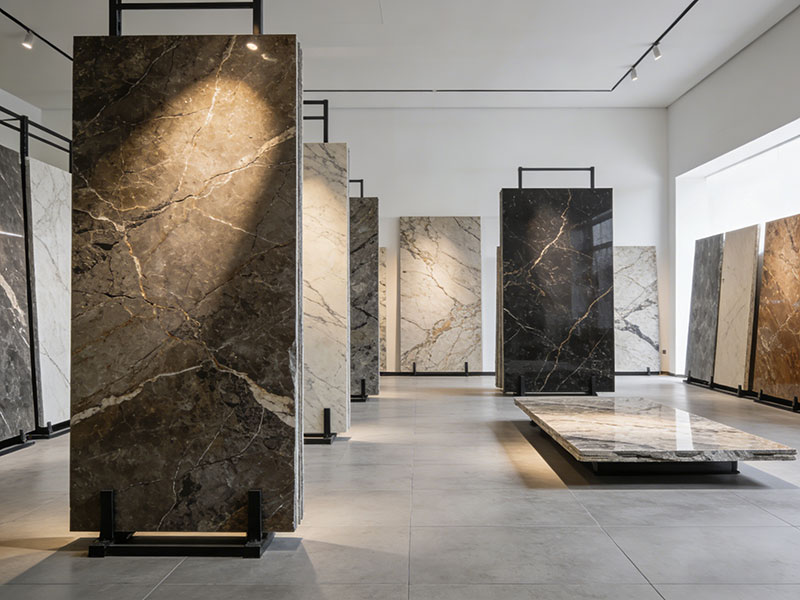
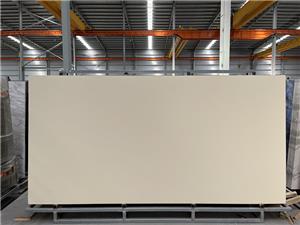
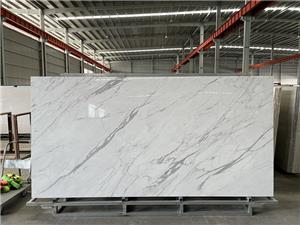
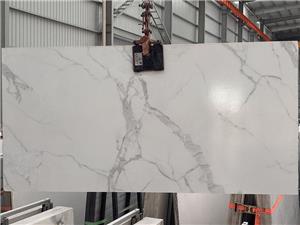
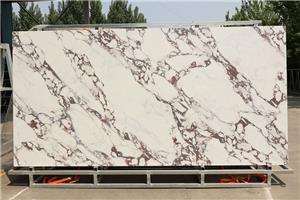
Because of this manufacturing method, sintered stone is often categorized as an ultra-compact surface, combining high density with excellent resistance to heat, scratching, and environmental exposure. It is typically produced in large-format slabs, which allows for seamless applications in countertops, wall cladding, and architectural facades.
In recent years, sintered stone has gained significant traction in premium residential and commercial projects, particularly where durability and design continuity are priorities.
What is Porcelain?
Porcelain is a high-performance ceramic material made from refined clay and minerals, fired at high temperatures to achieve strength and durability. It has been widely used for decades in flooring, wall tiles, and interior surfaces, making it one of the most established materials in the construction industry.
Compared to sintered stone, porcelain offers greater accessibility in terms of cost and installation. It is available in a wide range of finishes and formats, although it is most commonly used in tile form rather than large slabs.
While porcelain may not reach the same level of density as sintered stone, it remains a reliable and efficient solution for many standard applications.
Key Differences Between Sintered Stone and Porcelain
Although both materials fall under the category of high-performance surfaces, their differences become clear when evaluated from an engineering perspective.
Sintered stone is manufactured using significantly higher pressure, resulting in a denser and more compact internal structure. This directly contributes to its superior mechanical strength and near-zero water absorption rate. Porcelain, while still durable, has a slightly more porous structure and lower overall density.
In terms of thermal performance, sintered stone can withstand temperatures exceeding 300°C, making it suitable for demanding environments such as outdoor kitchens and façade systems. Porcelain performs well under normal indoor conditions but has a lower tolerance for extreme heat.
Another important distinction lies in format. Sintered stone is commonly produced in large-format slabs exceeding 3,200 mm, enabling seamless installations with minimal joints. Porcelain, by contrast, is more frequently used in smaller tile formats, which may introduce additional joints and installation complexity in large surfaces.
These differences are not just technical—they directly influence cost, installation requirements, and long-term performance.
Durability and Strength: Which Performs Better?
When comparing sintered stone vs porcelain countertops or slabs, durability is often the deciding factor.
Sintered stone typically achieves flexural strength in the range of 40–50 MPa, supported by its dense microstructure. This makes it highly resistant to bending, cracking, and impact, even in demanding environments. In contrast, porcelain generally falls within the 30–40 MPa range, which is sufficient for most residential and light commercial applications but less robust under heavy stress.
Industry testing consistently shows that materials with higher density exhibit improved resistance to wear and mechanical damage. This explains why sintered stone is increasingly specified for high-traffic commercial projects and large structural applications.
For buyers, this translates into a simple principle: the more demanding the environment, the more valuable the performance advantage of sintered stone becomes.
Heat Resistance, UV Stability, and Outdoor Performance
Thermal stability is another area where the difference between the two materials becomes evident.
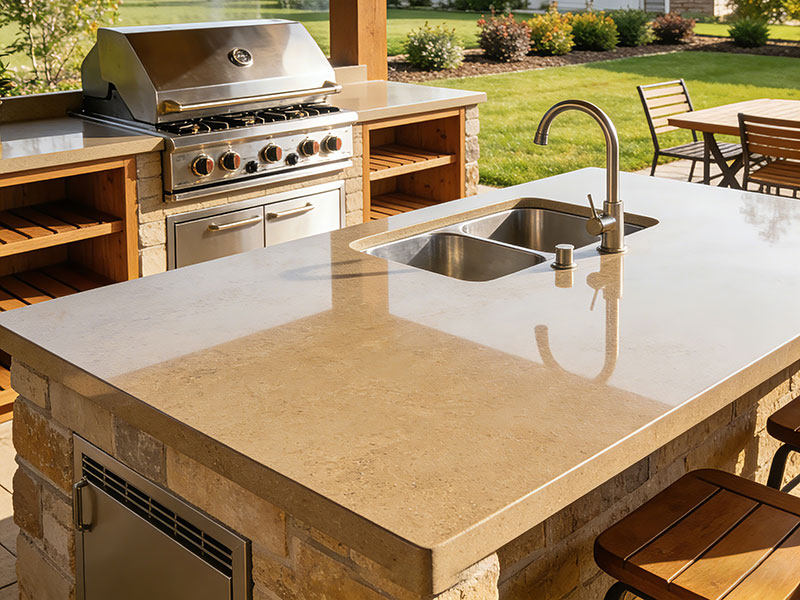
Sintered stone is engineered to withstand extreme temperatures, often exceeding 300°C without structural degradation. This makes it particularly suitable for applications involving direct heat exposure, such as kitchen countertops and outdoor installations.
Porcelain also offers good heat resistance due to its ceramic composition, but its performance threshold is typically lower. For indoor applications, this difference is rarely critical, but in outdoor or high-temperature environments, it can become a key consideration.
In addition, sintered stone demonstrates superior resistance to UV radiation, maintaining its color and structural integrity over time. This makes it a preferred material for exterior facades and architectural cladding, where long-term exposure to sunlight is unavoidable.
Water Absorption and Hygiene Performance
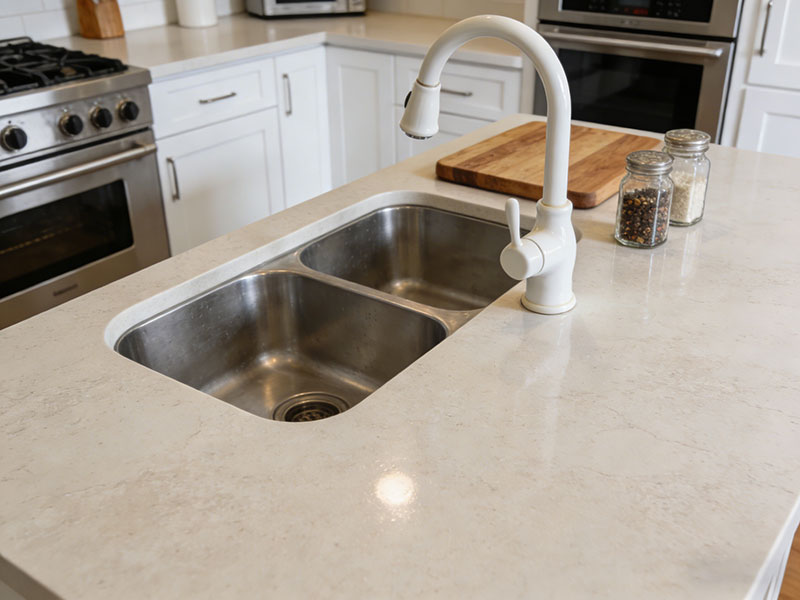
Both materials are classified as low-porosity surfaces, but sintered stone achieves near-zero water absorption, generally below 0.1%. Porcelain, while still highly resistant to moisture, typically falls between 0.1% and 0.5%.
From a practical standpoint, this difference affects stain resistance, hygiene, and long-term durability. Lower porosity reduces the risk of liquid penetration, making sintered stone particularly suitable for environments where cleanliness and resistance to contamination are critical.
For kitchens, bathrooms, and commercial spaces, both materials perform well, but sintered stone offers an additional margin of reliability.
Installation and Fabrication: Hidden Cost Factors
While material performance is essential, installation complexity often has a significant impact on total project cost.
Sintered stone requires specialized fabrication equipment and experienced installers due to its density and hardness. Cutting and handling large-format slabs demands precision, and improper processing can lead to material loss.
Porcelain, by contrast, is easier to cut and install using standard tools and widely available labor. This reduces both installation time and cost, making it a more practical option for large-scale flooring or wall projects.
For project planners, this highlights an important consideration: material cost alone does not reflect total project cost—installation plays a critical role.
Cost Comparison and ROI
In most markets, sintered stone is priced approximately 20–50% higher than porcelain. However, this difference should be evaluated in the context of long-term performance and maintenance.
Sintered stone’s durability, resistance to damage, and minimal maintenance requirements often translate into lower lifecycle costs, particularly in commercial environments where replacement and repair can be expensive.
Porcelain remains the more economical choice for projects with budget constraints or large surface areas, where its performance is sufficient and cost efficiency is a priority.
For B2B buyers, the decision often comes down to balancing initial investment against long-term value.
Best Applications: Choosing the Right Material
Selecting between sintered stone and porcelain depends on how the material will be used.
Sintered stone is generally the preferred option for kitchen countertops, large wall panels, outdoor kitchens, and façade systems, where durability, heat resistance, and large-format design are essential.
Porcelain is more suitable for flooring, bathroom walls, and cost-sensitive interior projects, where ease of installation and affordability are key factors.
Rather than viewing these materials as direct competitors, it is more accurate to consider them as complementary solutions optimized for different applications.
Common Mistakes to Avoid
One of the most common mistakes in material selection is focusing exclusively on price without considering performance requirements. While porcelain may offer immediate cost savings, it may not deliver the same long-term durability in demanding environments.
Another frequent issue is underestimating installation complexity, particularly for sintered stone. Without proper planning and skilled labor, the advantages of the material may not be fully realized.
A well-informed decision requires evaluating both technical specifications and practical implementation factors.
FAQ
Is sintered stone better than porcelain?
Sintered stone offers superior strength, heat resistance, and outdoor performance, while porcelain is more cost-effective and suitable for standard indoor applications.
Is sintered stone more expensive than porcelain?
Yes, sintered stone typically costs 20–50% more, but it often provides better long-term value in high-performance environments.
Which material is better for countertops?
Sintered stone is generally the better choice for countertops due to its durability and heat resistance.
Conclusion
The choice between sintered stone vs porcelain ultimately depends on the specific requirements of your project. Sintered stone delivers higher performance, particularly in demanding or outdoor environments, while porcelain provides a practical and cost-effective solution for standard applications.
For decision-makers, the key is to align material selection with both technical requirements and project goals. By doing so, it is possible to achieve an optimal balance between performance, cost, and long-term value.
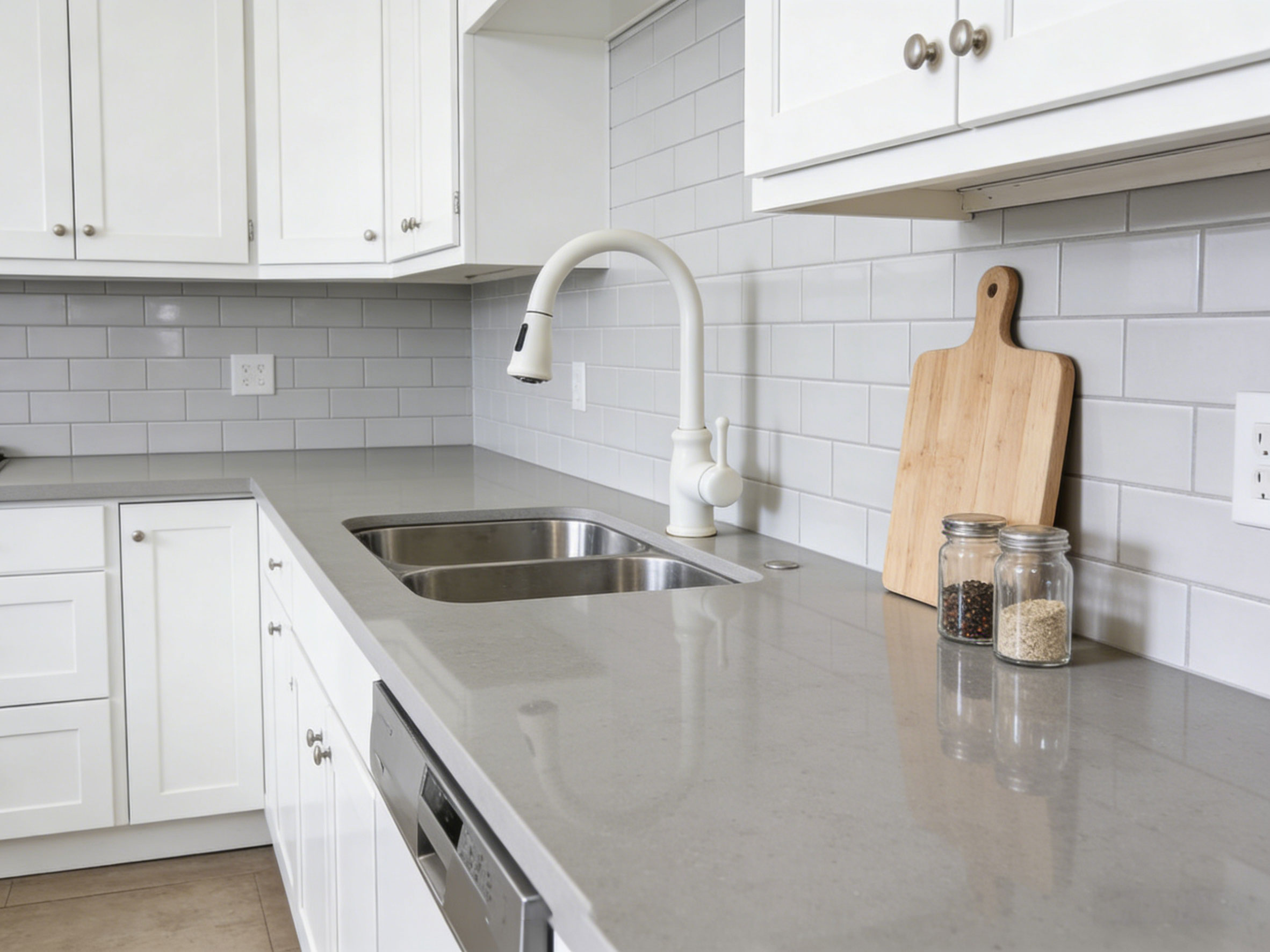
If your project requires large-format sintered stone slabs, custom specifications, or reliable bulk supply, working directly with an experienced manufacturer can significantly improve both product quality and cost efficiency.
Requesting samples, technical data sheets, and fabrication guidance in advance will help ensure that the selected material meets your project’s performance and design requirements.
Contact us to discuss your project specifications and receive tailored recommendations.