
6mm vs 12mm vs 20mm Sintered Stone: Which Thickness Fits the Application
Sintered stone is available in different thicknesses because projects do not all place the same demands on the material. A lightweight wall panel, a kitchen countertop and a substantial furniture surface may require very different specifications.
Among the thicknesses commonly considered for architectural and interior projects, 6mm, 12mm and 20mm represent distinctly different approaches to material selection. The choice is not simply a matter of deciding whether thinner or thicker is better. Application, support, fabrication, dimensions, handling and the intended appearance all influence the right specification.
Understanding these differences before ordering can help architects, fabricators, contractors and buyers select a format that is practical for the complete project rather than for one stage of it.
What Changes When Sintered Stone Thickness Changes?
The most obvious difference between 6mm, 12mm and 20mm sintered stone is material depth, but thickness affects more than the edge of the finished surface.
As thickness increases, the amount of material used per unit area also changes, which affects weight and handling. The available edge treatments can change as well, while fabrication and support requirements need to be considered according to the application.
At the same time, thickness should not be treated as an independent measure of performance. A sintered stone surface is part of a larger construction system. The substrate, support structure, dimensions, cutouts, installation method and fabrication process can all influence whether a particular thickness is appropriate.
This is why a thickness comparison is most useful when it is connected to the application.
For a broader framework on the factors that should be considered when selecting thickness, see our guide to choosing the right sintered stone thickness for a project.
6mm Sintered Stone Fits Applications Where Weight and Panel Efficiency Matter
At 6mm, sintered stone provides a relatively thin material format that can be attractive when reducing weight or material depth is an important part of the project.
This can make thinner material particularly interesting for wall and architectural applications where the surface is installed over an appropriate substrate or support system. When a panel does not need to span an unsupported area by itself, the construction behind the surface becomes an important part of the specification.
The lower material weight can also influence handling. Large pieces still require careful movement and support, but reducing the weight of each panel can be useful during transportation and installation.
The design effect is another consideration. A thin slab can create a refined, minimal edge where the visible material depth is intended to remain understated. This can work well with contemporary interiors where clean transitions are more important than a substantial stone edge.
However, 6mm should not be selected simply because it uses less material. The substrate and installation system must be suitable for the application, and fabrication requirements need to be considered before production.
For a large architectural project, the question is not whether 6mm is inherently sufficient. The question is whether the complete wall, panel or surface construction has been designed around the thinner format.
12mm Sintered Stone Offers a Practical Middle Ground
12mm occupies an important position between thin architectural formats and substantially thicker material. For many projects, it can provide a useful balance between material depth, weight, fabrication and finished appearance.
The suitability of 12mm depends on the application and construction details, but it can be considered for a range of horizontal and vertical surfaces when the supporting structure and fabrication method are appropriate.
For countertops, for example, the decision cannot be separated from the countertop construction itself. Sink and cooktop cutouts, overhangs, corners, edge profiles and the underlying support all affect the final specification.
The same principle applies to furniture. A 12mm tabletop can have a relatively clean visual profile while allowing the designer to create a carefully considered edge treatment. The dimensions and supporting frame still need to be evaluated before the material is fabricated.
Another advantage of considering 12mm is that it can provide a practical specification for projects where weight matters but an extremely thin visual profile is not the objective.
For commercial projects, consistency can also be important. If the same material is being used across multiple rooms, counters or furniture pieces, the project team needs to confirm that the chosen thickness, finish, format and design are available consistently from the manufacturer.
Rather than treating 12mm as a universal default, it is better understood as one of several possible specifications that can work across different project conditions.
20mm Sintered Stone Brings More Material Depth to the Design
A 20mm format provides substantially more material depth and can create a noticeably heavier visual presence.
This can be useful when the design calls for a substantial edge or when the material itself is intended to appear more prominent within the composition. Furniture, selected horizontal applications and other design situations may benefit from this visual character when the supporting construction is appropriate.
The additional material depth also changes how the finished edge can be expressed. Instead of relying on a very thin profile, designers may use the slab thickness as part of the visual language of the surface.
But a thicker material also introduces additional weight. That affects handling, transportation, fabrication and installation planning. The supporting structure may need to be considered accordingly, particularly when large pieces or substantial overhangs are involved.
It is therefore misleading to view 20mm simply as the premium choice because it is thicker.
For some projects, its visual depth may be exactly what the design requires. For others, the additional weight and material depth may offer little practical benefit.
The right specification depends on what the finished installation needs to achieve.
Application Matters More Than Thickness Alone
Comparing thicknesses becomes much more useful when the intended application is considered.
Countertops
Countertops are influenced by support, dimensions, cutouts and edge treatment.
A kitchen island with a large overhang and several openings presents different fabrication conditions from a compact vanity with continuous support. The thickness should therefore be selected together with the underlying construction rather than from the slab thickness alone.
For projects involving countertops, the available sintered stone countertop solutions should be evaluated alongside the technical requirements of the installation.
Walls
Wall applications often place greater emphasis on weight, panel dimensions, substrate compatibility and installation method.
A thinner format may be advantageous where the design and support system permit it, particularly when large panels are being handled vertically. But the substrate and installation system must be appropriate for the selected material.
This makes wall applications a good example of why thicker is not automatically better.
Furniture
Furniture introduces a combination of structural and aesthetic considerations.
A tabletop needs to work with its supporting frame, dimensions and intended edge treatment. A relatively thin surface may create a refined appearance, while a thicker format can contribute more visual mass.
The appropriate choice depends on the furniture design rather than on a universal thickness recommendation.
Commercial and Architectural Surfaces
Large commercial projects add another layer of complexity because material may need to be produced, transported and installed repeatedly across multiple areas.
Consistency of thickness, finish, slab format and appearance becomes important. The project team also needs to consider how the selected format will move through fabrication and installation.
For these projects, thickness should be confirmed as part of the complete material specification.
Thickness Also Changes Fabrication and Handling Requirements
The difference between 6mm, 12mm and 20mm becomes particularly relevant once the material reaches fabrication.
Cutting, drilling, edge processing and creating sink or appliance openings require a fabrication plan appropriate to the selected material and application. Support during fabrication is important, especially when producing large pieces with narrow sections or significant cutouts.
Handling also changes as material weight changes.
A large slab is not only a surface to be cut. It is a large piece of material that needs to be moved from storage to fabrication, through processing and eventually to the installation site. The combination of slab dimensions and thickness determines much of the practical handling requirement.
This is why fabricators should evaluate thickness together with the complete cutting and installation process rather than treating the material specification as a purchasing decision alone.
For a deeper look at this relationship, see the upcoming guide on how sintered stone thickness affects fabrication.
Slab Size and Thickness Need to Be Planned Together
Thickness becomes even more important when the project uses large-format slabs.
A large slab can reduce the number of joints and create greater freedom for design layouts, but it can also increase the complexity of handling and fabrication. The relationship between slab size and thickness therefore needs to be considered before the material is ordered.
For example, a designer may want to use one large piece to create visual continuity across a substantial surface. The fabricator then needs to determine whether the slab can be safely handled, supported and processed while maintaining the desired layout.
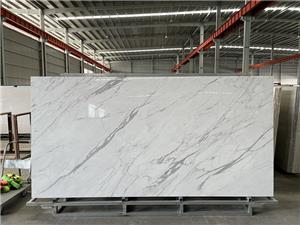
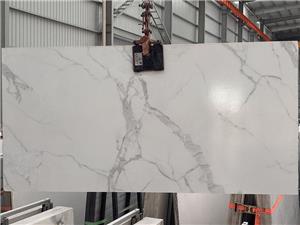
Veining adds another consideration for decorative surfaces. If a slab contains prominent movement or Calacatta-style veining, the cutting layout may be influenced by the desired direction and position of the pattern.
This means thickness, slab dimensions and design layout should be coordinated rather than specified separately.
Our guide to how large sintered stone slabs can be provides a useful starting point for understanding the format side of this decision.
How to Decide Between 6mm, 12mm and 20mm
The most practical way to select between the three thicknesses is to work through the project requirements rather than rank the materials from thinnest to thickest.
Start with the application. Determine whether the material is being used on a wall, countertop, furniture surface or another architectural element.
Then consider the support system. A substrate-supported panel can present very different requirements from a large horizontal surface with openings or overhangs.
Next, review the finished dimensions. Large pieces require more careful planning for fabrication, movement and installation regardless of the selected thickness.
The desired edge appearance should also be established early. If the thickness of the material is an important part of the visual design, this needs to be incorporated into the fabrication plan rather than added later.
Finally, confirm the specification with the manufacturer and fabricator. The technical documentation for the actual sintered stone product should take precedence over general assumptions about what a particular thickness can or cannot do.
A useful way to think about the three options is that 6mm emphasizes material efficiency and reduced weight in suitable supported applications, 12mm provides a versatile middle-ground specification for many projects, and 20mm emphasizes greater material depth and a more substantial visual presence where the application supports it.
None of these characteristics makes one thickness universally superior.
The Best Thickness Depends on the Complete Project Specification
The comparison between 6mm, 12mm and 20mm sintered stone is ultimately not a competition between thin, medium and thick material.
Each thickness can serve a different purpose.
A 6mm format can be useful when weight and material depth need to be minimized within an appropriate construction system. A 12mm format can provide a practical balance for applications where moderate material depth and manageable handling are important. A 20mm format can create a more substantial appearance when the application, support and fabrication requirements make the additional depth appropriate.
The strongest specification considers all of these factors together.
Before ordering, the project team should confirm the application, slab dimensions, support conditions, fabrication method, edge treatment and installation requirements. For larger commercial orders, production consistency and the availability of the required specifications should also be verified with the manufacturer.
In other words, the right question is not simply which thickness is best?
It is which thickness makes the most sense for this particular project?
That approach gives buyers and specifiers a more reliable basis for selecting sintered stone and planning the finished installation.