
Best Green Luxury Kitchen Surfaces for 2026
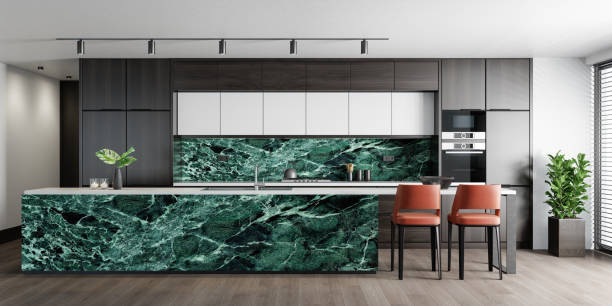
Introduction — Why Green Luxury Kitchen Surfaces Are Dominating 2026
Kitchen design is experiencing a fascinating transformation. The immaculate white interiors that once symbolized contemporary sophistication are gradually yielding to spaces filled with richer emotional texture and stronger material identity. Luxury today feels less sterile and more atmospheric. More tactile. More connected to nature. Across residential architecture and premium interiors, green luxury kitchen surfaces have emerged as the defining expression of this transition. Their growing influence extends beyond aesthetics alone. It reflects changing attitudes toward comfort, wellness, and the desire for interiors that feel enduring rather than transient.
The End of White Kitchen Monotony
For years, white kitchens occupied an almost ceremonial position in interior design. They conveyed cleanliness and visual simplicity, yet repetition slowly transformed familiarity into predictability. Endless expanses of white cabinetry and pale stone began to feel formulaic. Green surfaces introduce contrast and complexity. They bring visual cadence into kitchens, replacing monotony with depth and creating spaces that feel curated rather than assembled.
The Rise of Biophilic Interior Design
Biophilic design has moved far beyond passing architectural jargon. It has become a central design philosophy rooted in the human desire for connection with natural environments. Interiors increasingly borrow cues from landscapes, geological textures, and organic palettes to create spaces that restore psychological equilibrium. Green kitchen surfaces naturally align with this movement.
Deep forest tones, mineral veining, and stone-inspired textures evoke a sense of calm often associated with outdoor environments. Kitchens no longer function solely as practical spaces; they are becoming immersive settings designed for ritual, interaction, and emotional comfort. Green surfaces contribute a quiet vitality that feels instinctive rather than decorative.
How Hospitality Trends Are Influencing Residential Kitchens
Luxury hospitality often acts as a preview of broader residential design evolution. Boutique hotels, wellness resorts, and premium hospitality spaces increasingly embrace rich stone textures and layered natural palettes to cultivate memorable sensory experiences.
Homeowners have taken notice. Residential kitchens are now borrowing from hospitality design language—incorporating dramatic surfaces, sculptural islands, and materials with stronger visual narratives. Green luxury kitchen surfaces fit seamlessly within this movement, introducing a sense of resort-inspired sophistication once reserved for elite destinations.
Why Green Has Become the New Language of Modern Luxury
Luxury no longer depends solely on rarity or ornamentation. It increasingly revolves around atmosphere, authenticity, and permanence. Green possesses a distinctive emotional resonance. It feels restorative yet sophisticated. Bold yet tranquil.
Emerald tones, moss-inspired hues, and deep mineral shades communicate a form of understated opulence that brighter palettes often struggle to achieve. Green also carries subtle associations with sustainability and conscious design, reinforcing values that modern consumers increasingly prioritize. In contemporary interiors, green has evolved beyond color. It has become an architectural dialect through which luxury now speaks.
Green Sintered Stone Is Leading the Luxury Surface Evolution
As luxury kitchen design evolves, materials are being evaluated through a more sophisticated lens. Visual appeal remains important, but performance, sustainability, and longevity now occupy equal territory in the conversation. Within this changing landscape, green sintered stone has emerged as a compelling material protagonist. It captures geological beauty while responding to contemporary demands for durability and thoughtful material innovation.
Why Green Sintered Stone Is Capturing Designer Attention
Designers are increasingly drawn to materials that communicate personality without sacrificing restraint. Green sintered stone offers that elusive equilibrium. Rich emerald veining, deep forest tonalities, and layered mineral textures introduce a sculptural quality that feels both natural and meticulously curated. It creates immediate visual gravitas while maintaining an understated elegance increasingly favored within premium interiors.
The Emerald Marble Effect Without Natural Stone Limitations
Natural emerald marble possesses undeniable allure, yet beauty often arrives accompanied by maintenance complexities and material sensitivities. Green sintered stone recreates this dramatic aesthetic language with remarkable realism. Veins appear sedimentary and organic, flowing across expansive slabs with striking continuity. The result captures the atmospheric grandeur of exotic stone while avoiding many concerns associated with porosity, staining, and long-term wear.
Silica Conscious Materials and the Future of Kitchen Design
Material conversations are shifting. Health considerations and fabrication safety increasingly influence architectural specifications alongside aesthetics. Green sintered stone aligns naturally with this progression, particularly as many advanced formulations move toward lower-silica or silica-conscious compositions. This evolution reflects a broader transformation within surface design—one where beauty and material responsibility are no longer separate considerations.
Heat Resistance Scratch Resistance and Everyday Durability
Luxury surfaces are expected to endure daily life with composure. Green sintered stone performs with quiet resilience. Hot cookware, abrasive utensils, and constant activity rarely compromise its structural integrity. Unlike surfaces requiring delicate treatment, it tolerates culinary unpredictability with remarkable fortitude. Practical performance becomes invisible, allowing the material itself to remain the focal point.
Low Maintenance Surfaces for High End Living
Modern luxury increasingly values ease over excess. Green sintered stone supports this philosophy through its dense, low-porosity composition and minimal upkeep requirements. It resists common household staining and avoids demanding maintenance rituals. Instead of constant preservation, homeowners gain permanence. Sophisticated environments become easier to enjoy when materials are designed not merely to impress, but to simplify everyday living.
The Best Green Luxury Kitchen Surfaces for 2026
Luxury kitchen design in 2026 is no longer defined by a single material category. Instead, it is shaped by a constellation of surfaces that merge aesthetics, durability, and emotional resonance. Green has emerged as the dominant chromatic force within this movement, introducing depth and geological character into spaces increasingly designed around experience rather than mere utility. Among the leading materials, several surfaces stand apart for their visual identity and architectural versatility.
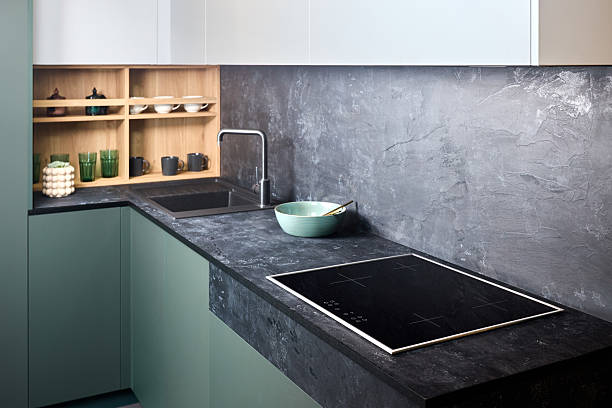
Green Sintered Stone
Green sintered stone continues to gain momentum as one of the most compelling luxury surfaces available today. Combining advanced engineering with mineral-inspired aesthetics, it satisfies the growing demand for surfaces that are as resilient as they are visually arresting.
Emerald Veining and Dramatic Mineral Patterns
The visual language of green sintered stone feels distinctly geological. Emerald currents, smoky undertones, and layered mineral veining create a dynamic interplay across expansive slabs. Some surfaces evoke the grandeur of Verde Alpi marble, while others resemble volcanic sediment or rainforest stone formations. Rather than appearing static, these materials possess movement—an almost topographical rhythm that transforms countertops into sculptural focal points.
Best Applications for Green Sintered Stone Kitchens
Green sintered stone performs particularly well in applications where continuity and visual impact matter. Waterfall kitchen islands become monolithic centerpieces. Full-height backsplashes create immersive stone environments. Open-plan spaces increasingly extend these surfaces onto integrated dining tables, shelving features, and even adjoining outdoor kitchens. Its adaptability allows designers to establish a cohesive architectural narrative throughout an entire space.
Why It Balances Performance and Luxury
Luxury and durability once occupied separate territories. Green sintered stone dissolves that distinction. Resistant to heat, scratches, and everyday wear, it performs with quiet confidence while maintaining extraordinary visual sophistication. It offers the atmosphere of rare natural stone without requiring the delicate stewardship often associated with premium materials.
Green Porcelain Slabs
Green porcelain slabs continue to attract attention for their versatility and visual precision. Their large-format dimensions and lightweight composition make them particularly appealing within modern architectural environments.
Indoor and Outdoor Design Possibilities
Few materials transition between environments as seamlessly as porcelain. Interior kitchen countertops can flow outward toward exterior cooking spaces without interruption. Rich green tones maintain their integrity under sunlight and environmental exposure, allowing architects to create uninterrupted visual continuity between interior living areas and outdoor landscapes.
Green Marble Countertops
Natural green marble retains a mystique difficult to replicate entirely. Its unpredictability remains part of its charm. Veining appears spontaneous, formed over geological epochs rather than industrial processes.
Where Natural Marble Still Excels
Marble continues to excel in spaces prioritizing singularity and organic beauty above all else. No two slabs are identical. Subtle chromatic shifts and naturally occurring imperfections create a level of individuality that appeals to those seeking materials with deeply authentic character. For statement installations and bespoke environments, marble retains enduring allure.
Green Quartzite Surfaces
Green quartzite introduces a more rugged interpretation of luxury. Dense mineral composition and crystalline depth create surfaces that feel both elemental and refined.
Maintenance Considerations Before Installation
Despite its impressive durability, quartzite still requires thoughtful planning. Depending on composition, periodic sealing may be necessary to preserve resistance against staining and moisture absorption. Understanding maintenance expectations before installation helps ensure that long-term performance aligns with lifestyle requirements and design aspirations.
Sustainable Recycled Green Surfaces
Sustainability increasingly influences luxury purchasing decisions. Recycled surface materials are emerging as a compelling category for those seeking environmental consciousness without aesthetic compromise.
Eco Driven Materials Entering Luxury Design
Recycled green surfaces often incorporate reclaimed glass, ceramic fragments, and repurposed mineral content into richly textured compositions. Their appeal extends beyond appearance. They represent a broader philosophical shift—one in which material provenance and environmental stewardship become integral components of luxury itself. In 2026, responsible design is no longer peripheral. It is becoming central to how beauty is defined.
Green Kitchen Surface Trends Designers Predict for 2026
Kitchen design trends for 2026 reveal a notable departure from visual uniformity and restrained neutrality. Designers are increasingly favoring surfaces with stronger emotional presence—materials that feel immersive, layered, and richly atmospheric. Green has become central to this evolution, not merely as a color choice, but as a broader design philosophy rooted in natural influence and sensory depth.
Deep Forest Green Is Replacing Bright Minimalism
For years, bright minimalism dictated contemporary interiors. White cabinetry, pale surfaces, and immaculate monochromatic palettes created a sense of visual order. Yet excessive simplicity eventually produced spaces that felt emotionally distant. Deep forest green introduces a dramatically different temperament.
These darker tonalities create intimacy and architectural gravity. They soften modern kitchens while adding complexity and visual warmth. Forest-inspired hues possess a quiet richness that feels simultaneously grounded and luxurious, replacing sterile brightness with spaces that feel more personal and enduring.
Emerald Inspired Stone Looks Are Rising Fast
Emerald-inspired surfaces are rapidly gaining momentum across luxury kitchen design. Designers are gravitating toward slabs that replicate the chromatic intensity and geological movement of rare green marble formations. Veining now appears more expressive, layered, and mineral-rich than previous generations of engineered surfaces.
These stone-inspired aesthetics introduce a sense of natural drama without becoming visually overwhelming. Emerald surfaces possess a curious duality: they feel bold yet refined, expressive yet timeless. Their growing popularity reflects a desire for materials capable of creating memorable architectural moments.
Layered Natural Tones and Earth Inspired Color Stories
Flat color palettes are giving way to compositions with greater dimensionality. Designers increasingly pair green surfaces with earth-derived tones such as smoked walnut, travertine, clay, oxidized bronze, and textured limestone. The resulting environments feel more tactile and nuanced.
This layered approach creates interiors that resemble curated landscapes rather than assembled rooms. Color becomes less decorative and more atmospheric. Kitchens begin to feel connected to terrain, geology, and natural ecosystems—spaces designed not merely to be seen, but to be experienced.
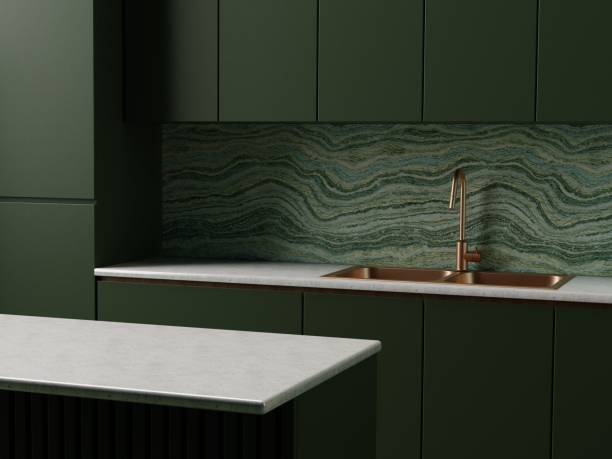
Luxury Kitchen Designs That Showcase Green Surfaces Beautifully
Green surfaces reveal their full architectural potential when paired with intentional design composition. Material alone is never the entire story. Scale, contrast, texture, and surrounding elements determine whether a kitchen feels merely attractive or genuinely unforgettable. The following design approaches demonstrate how green luxury surfaces can transform kitchens into immersive visual experiences.
Waterfall Islands That Feel Sculptural
Waterfall islands transform green surfaces into monolithic centerpieces. Veining descends uninterrupted from countertop to floor, creating a seamless geological effect. The result feels less like cabinetry and more like carved architecture. Bold yet elegant. Functional yet deeply sculptural.
Floor to Ceiling Stone Backsplashes
Extending green stone from countertop to ceiling introduces remarkable visual continuity. Rather than interrupting the eye with segmented materials, full-height backsplashes create an enveloping atmosphere. Mineral patterns become panoramic compositions, turning ordinary walls into dramatic architectural canvases.
Green Countertops Paired With Walnut Cabinetry
Walnut and green surfaces possess an almost symbiotic harmony. The warmth of richly grained wood softens darker stone tones, creating depth and chromatic balance. Together they produce interiors that feel grounded, tactile, and quietly luxurious without becoming visually excessive.
Metallic Accents That Elevate Green Surfaces
Metallic details introduce a layer of refinement capable of transforming an already sophisticated kitchen. Brushed brass, smoked bronze, and muted champagne finishes create luminous contrast against green stone. Small details suddenly become atmospheric punctuation marks, amplifying the richness of surrounding materials.
How to Choose the Right Green Luxury Kitchen Surface
Selecting a green luxury kitchen surface is not merely a stylistic decision. It is an architectural commitment—one that must harmonize aesthetics, performance, and lived experience. The most successful kitchens are not defined by fleeting trends, but by materials chosen with discernment and foresight.
Match Materials to Daily Lifestyle Demands
Every kitchen carries its own rhythm. Some are ceremonial, used sparingly for curated gatherings. Others are kinetic environments, shaped by constant cooking, movement, and activity. Green luxury surfaces must respond to these realities.
A high-traffic kitchen demands resilience against heat, impact, and daily wear. In contrast, a visually expressive but lightly used space may prioritize aesthetic depth over extreme durability. The material must align with lifestyle cadence. Not the other way around. When this alignment is achieved, the kitchen feels effortlessly natural—never forced.
Consider Maintenance Before Appearance Alone
Beauty without practicality often leads to long-term dissatisfaction. Green surfaces, especially those with intricate veining or natural stone origins, may vary significantly in maintenance requirements.
Non-porous engineered options reduce upkeep dramatically, resisting staining and moisture absorption with minimal intervention. Natural stone, while visually unparalleled, may require periodic sealing and careful handling. Understanding these nuances before selection ensures the surface remains a source of pleasure rather than obligation.
Luxury today is defined by ease as much as elegance.
Think Beyond Trends and Prioritize Longevity
Design trends move in cycles, often shifting faster than the lifespan of a kitchen renovation. Green surfaces may be trending now, but the deeper question lies in longevity—does the material still feel relevant in ten or fifteen years?
Timeless selections typically balance expressive color with restrained patterning. Subtle emerald tones, mineral-inspired veining, and natural depth tend to age more gracefully than overly stylized finishes. Enduring design is quiet, confident, and resistant to aesthetic fatigue.
Questions Designers Ask Before Material Selection
Professional designers rarely begin with color. They begin with questions. How will the surface interact with lighting throughout the day? Will it anchor or compete with cabinetry? Does it transition well into adjoining spaces? Can it withstand both visual and physical demands?
These considerations form the invisible framework behind every successful selection. Green luxury kitchen surfaces are chosen not in isolation, but as part of a broader spatial dialogue—one that balances atmosphere, performance, and architectural intent.
Common Mistakes Buyers Make When Choosing Green Surfaces
Green luxury surfaces possess an undeniable magnetism. They feel rich, architectural, and deeply atmospheric. Yet this visual allure often leads buyers into subtle miscalculations—decisions driven by immediate aesthetic attraction rather than long-term spatial intelligence. The result is a surface that may look exceptional in isolation, but underperforms within the lived environment.
Choosing Color Without Evaluating Lighting Conditions
Color is never static. It is a dialogue between material and light. Green surfaces, in particular, shift dramatically depending on illumination—sunlight, warm interior lighting, and shadow all alter perception.
A deep emerald slab may appear vibrant and luminous in a showroom, yet turn subdued or overly dark in a north-facing kitchen. Conversely, lighter green tones can take on unexpected intensity under warm artificial lighting. Without evaluating lighting conditions in situ, the chosen surface may lose its intended emotional impact and spatial harmony.
Ignoring Slab Scale and Vein Movement
Veining is the narrative structure of stone-inspired surfaces. It dictates rhythm, flow, and visual continuity. When slab scale is overlooked, these natural patterns can become fragmented or disjointed, disrupting the architectural coherence of the space.
Large format slabs often reveal their true elegance through uninterrupted movement—flowing mineral lines that traverse islands and backsplashes like geological currents. Misjudging scale results in visual interruption, where what should feel sculptural becomes visually segmented and less compelling.
Prioritizing Cost Over Performance
Initial pricing often becomes the dominant decision factor, yet it rarely reflects long-term value. Lower-cost surfaces may compromise on durability, stain resistance, or thermal stability. Over time, these limitations translate into maintenance costs, premature wear, or aesthetic degradation.
In luxury kitchen design, performance is inseparable from perception. A surface that fails under daily use diminishes the integrity of the entire space. True value lies in longevity, not just acquisition cost.
Overlooking Fabrication Requirements
Even the most exquisite surface can be compromised during fabrication if technical requirements are underestimated. Cutting methods, edge detailing, seam placement, and installation precision all influence final appearance and durability.
Green sintered stone, porcelain, and natural stone each demand specific handling protocols. Ignoring these nuances can lead to chipping, misalignment, or visible seams that disrupt visual continuity. Proper fabrication is not a secondary step—it is an essential extension of design intent.
FAQ
Green luxury kitchen surfaces continue to generate strong interest as designers, homeowners, and developers explore new material directions for 2026. Below are the most frequently raised questions, addressing both practical concerns and aesthetic considerations.
Are green luxury kitchen surfaces still trending in 2026
Yes, and their momentum is accelerating. Green has transitioned from a niche design accent into a defining architectural color. Its association with biophilic design, wellness-driven interiors, and luxury hospitality aesthetics ensures continued relevance across high-end residential projects.
Is green sintered stone better than marble
They serve different design philosophies. Marble offers unmatched natural individuality, while green sintered stone delivers engineered consistency, higher durability, and lower maintenance demands. For active kitchens, sintered stone often provides a more resilient long-term solution without sacrificing visual richness.
Which green countertop material is easiest to maintain
Non-porous engineered surfaces such as green sintered stone and select porcelain slabs are typically the easiest to maintain. They resist staining, require minimal sealing, and tolerate everyday kitchen activity with minimal degradation over time.
Are green kitchen surfaces suitable for outdoor use
Certain materials, particularly sintered stone and porcelain, perform exceptionally well outdoors due to their UV resistance and low water absorption. They maintain color stability and structural integrity even under fluctuating environmental conditions, making them ideal for exterior kitchens and alfresco installations.
What cabinet colors pair best with green countertops
Green surfaces pair beautifully with warm natural tones such as walnut, oak, and smoked timber. For more contemporary aesthetics, matte black, soft taupe, and brushed metallic finishes create sophisticated contrast without overwhelming the material’s natural depth.
Final Thoughts
Green luxury kitchen surfaces represent more than a passing aesthetic movement. They signal a broader shift in design philosophy—one that values emotional resonance as much as visual impact. Kitchens are no longer purely functional zones; they have become immersive environments shaped by material storytelling, atmospheric depth, and tactile richness.
Within this evolving landscape, green emerges as a grounding force. It introduces calm without monotony, elegance without excess, and presence without noise. Whether expressed through sintered stone, porcelain, or natural stone, its versatility allows it to adapt across architectural styles while retaining its distinctive identity.
As 2026 approaches, green continues to define a new standard of luxury—one that is quieter, more intentional, and profoundly connected to the natural world.