
Is Sintered Stone Worth the Cost for Kitchen Countertops? A Long-Term Value Analysis
At first glance, sintered stone kitchen countertops often appear more expensive than quartz or entry-level stone options. This leads many buyers to ask a fair question:
Is sintered stone really worth the cost?
In 2026, the answer increasingly depends on how buyers evaluate value. While price-only comparisons focus on upfront cost, experienced homeowners, designers, and builders are shifting toward lifecycle cost—what a countertop actually costs over 10–20 years of ownership.
This article breaks down the numbers, risks, and long-term realities behind sintered stone to help you decide whether the investment makes sense for your kitchen.
Why "Price" Alone Is a Misleading Metric
Kitchen countertops are not disposable products. They are:
Permanently installed
Central to daily use
Costly to replace once installed
A lower upfront price can become far more expensive when maintenance, repairs, or replacement enter the equation.
That's why the real question isn't:
"What does it cost today?"
But rather:
"What will it cost me over time?"
Lifespan Math: Comparing Real Ownership Timelines
Let's look at typical lifespan expectations in real kitchens:
Material | Expected Lifespan (Kitchen Use) |
Laminate | 5–10 years |
Quartz | 10–15 years |
Natural marble | 10–15 years (with care) |
Sintered stone | 20+ years |
Sintered stone is engineered to withstand heat, stains, UV exposure, and daily wear, which significantly extends its usable life.
Lifespan takeaway:
A countertop that lasts twice as long doesn’t cost twice as much—it often costs less over time.
Maintenance Costs Add Up Quietly
Maintenance is where many "affordable" countertops become expensive.
Ongoing Costs to Consider
Sealing (natural stone)
Specialized cleaners
Professional refinishing
Stain remediation
Repair of chips or cracks
These costs rarely appear in initial quotes—but they accumulate over years.
Sintered Stone Advantage
Sintered stone requires:
No sealing
No special cleaners
No periodic refinishing
Routine cleaning with water and mild detergent is typically sufficient.
Maintenance takeaway:
Lower maintenance doesn’t just save money—it reduces long-term hassle and uncertainty.
Replacement Risk: The Hidden Cost Buyers Ignore
Replacing a kitchen countertop is rarely simple.
It often involves:
Removal and disposal
Cabinet disruption
Backsplash damage
Sink and appliance reinstallation
Project downtime
Even if the replacement material is inexpensive, the process itself is not.
Materials with Higher Replacement Risk
Porous stones prone to staining
Resin-based surfaces sensitive to heat
Natural slabs with structural fissures
Why Sintered Stone Lowers Replacement Risk
Sintered stone demonstrates:
High heat resistance
Non-porous performance
Structural consistency across slabs
This dramatically reduces the likelihood of early failure that forces replacement.
Cost Comparison Over 20 Years
While prices vary by market and supplier, the pattern is consistent:
Lower-priced materials may need repair, refinishing, or replacement
Higher-performance materials tend to remain in place longer
When spread over 15–20 years, sintered stone often proves cost-competitive or even more economical than surfaces with lower upfront pricing but higher long-term risk.
Why “Worth It” Content Outperforms Price Pages in 2026
In 2026, buyers are better informed and more risk-aware.
Price-only pages:
Attract bargain hunters
Compete on narrow margins
Convert poorly for premium products
“Worth it” content:
Educates serious buyers
Frames cost as investment
Aligns with decision-stage intent
This is why value-based content consistently outperforms price lists for high-performance materials like sintered stone.
Is Sintered Stone Worth the Cost for Kitchen Countertops?
For buyers who:
Cook frequently
Want low maintenance
Expect long-term durability
Prefer predictable performance
Yes—sintered stone is worth the cost.
For buyers who prioritize the lowest possible upfront price and accept replacement risk, other materials may appear attractive—but often temporarily.
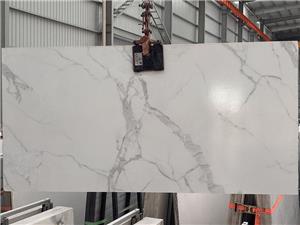
Taj Mahal Sintered Stone: Value Beyond Appearance
Taj Mahal sintered stone combines:
Marble-inspired aesthetics
High heat and stain resistance
Long-term color stability
Reduced failure risk
It is frequently chosen not because it is the cheapest option—but because it minimizes regret over time.
Final Takeaway
Kitchen countertops should be evaluated the way buyers evaluate roofs, windows, or flooring—not as décor, but as long-term infrastructure.
When lifespan, maintenance, and replacement risk are factored in, sintered stone often proves to be a smarter investment, not a luxury splurge.
In 2026, value-driven buyers are no longer asking:
"What costs less today?"
They are asking:
"What will I still be happy with in 15 years?"
FAQ: Is Sintered Stone Worth It?
Is sintered stone more expensive than quartz?
Upfront pricing can be higher, but sintered stone often offers lower long-term ownership cost due to reduced maintenance and replacement risk.
How long do sintered stone countertops last?
In typical kitchen use, sintered stone countertops are expected to last 20 years or more.
Does sintered stone require sealing?
No. Sintered stone is non-porous and does not require sealing.
Is sintered stone a good choice for luxury kitchens?
Yes. It is widely used in luxury kitchens for its combination of performance, consistency, and refined aesthetics.