
Why Sintered Stone Slabs Are Replacing Natural Stone in Modern Projects
Introduction: A Shift in Material Preference
For centuries, natural stone has defined architectural prestige. Marble, granite, and limestone have long symbolized durability, permanence, and design excellence. Yet in recent years, a noticeable shift has emerged across residential, commercial, and large-scale development projects: sintered stone slabs are increasingly specified in place of natural stone.
This shift is not driven by aesthetics alone. It reflects changing project requirements, tighter construction timelines, sustainability concerns, fabrication efficiency, and long-term performance expectations.
Rather than framing this as a competition between traditional and engineered materials, it is more accurate to view it as a market evolution. Modern projects demand predictability, scalability, and technical reliability—areas where sintered stone slabs are gaining measurable ground.
Consistency in Design and Supply
Natural Stone Variability
Natural stone is inherently variable. Veining patterns, mineral deposits, and tonal shifts differ from slab to slab. While this uniqueness is often valued, it can create coordination challenges in large projects where visual continuity is critical.
Matching slabs across phases of construction can be difficult, particularly when quarries experience supply limitations or geological inconsistencies.
Controlled Production of Sintered Stone
Sintered stone slabs are manufactured under controlled conditions, allowing for repeatable color patterns and consistent finishes across production batches. For architects working on hospitality chains, retail rollouts, or multi-unit developments, this consistency simplifies procurement and ensures predictable results.
When uniformity is essential across dozens or hundreds of installations, manufactured control becomes a strategic advantage.
Performance Expectations in Modern Architecture
Increased Demand for Durability
Modern projects often place greater mechanical and environmental stress on surfaces than in the past. Open-plan kitchens, mixed-use commercial spaces, and outdoor-integrated designs require materials that withstand heat, abrasion, and UV exposure without frequent maintenance.
While many natural stones perform well, some require sealing, ongoing care, or are sensitive to staining and etching.
Engineered for Resistance
Sintered stone slabs are engineered through high-pressure compaction and ultra-high-temperature firing. This process produces a dense, non-porous surface resistant to heat, scratching, moisture, and sunlight exposure.
The reliability of these performance characteristics reduces uncertainty in specification and supports long-term durability goals.
Maintenance and Lifecycle Considerations
Ongoing Maintenance of Natural Stone
Certain natural stones require periodic sealing to maintain stain resistance. Acid-sensitive stones may etch when exposed to common household substances. Over time, wear patterns can alter appearance, especially in high-traffic environments.
While many clients accept this as part of natural stone ownership, commercial developers often prioritize low-maintenance solutions.
Reduced Maintenance Requirements
Sintered stone slabs typically do not require sealing and are resistant to common staining agents. Cleaning protocols are straightforward, and surface performance remains stable over time.
For property managers and hospitality operators, lower maintenance translates into reduced operational cost and fewer service interruptions.
Structural and Installation Advantages
Weight and Thickness Flexibility
Natural stone slabs are often heavier, particularly at traditional thicknesses. Transport, handling, and structural support requirements must be carefully engineered.
Sintered stone slabs are available in multiple thickness options, including thinner formats that reduce overall weight. This flexibility allows designers to apply stone-like surfaces in areas where natural stone might exceed load limitations.
Thinner slabs can also simplify vertical cladding and furniture integration.
Sustainability and Environmental Considerations
Quarrying Impact
Natural stone extraction involves quarrying, which can have environmental and logistical implications. Transportation from quarry sites to fabrication facilities also contributes to carbon footprint.
Efficient Material Use
Sintered stone manufacturing uses controlled mineral blends and optimized production processes. Because thinner slabs can achieve comparable visual impact, material usage per square meter may be reduced.
Additionally, production environments allow for waste control and quality consistency that can be harder to achieve in quarry-based supply chains.
Sustainability evaluation should consider full lifecycle analysis, including durability, replacement frequency, and maintenance demands.
Large-Format Architectural Trends
Demand for Seamless Surfaces
Contemporary architecture increasingly favors large, uninterrupted surfaces with minimal joints. Achieving this aesthetic with natural stone can be challenging due to quarry block size limitations and weight constraints.
Large-Format Sintered Stone Capabilities
Modern production technology enables large-format sintered stone slabs that support expansive design concepts. Reduced joint lines enhance visual continuity and simplify cleaning in commercial environments.
As demand for oversized panels grows, materials engineered for scale gain a competitive advantage.
Cost Predictability and Procurement Efficiency
Pricing Volatility in Natural Stone
Natural stone pricing can fluctuate based on quarry yield, transportation conditions, and global supply factors. Rare or premium stones may experience sudden availability constraints.
Controlled Manufacturing Output
Sintered stone production schedules and output volumes are typically more predictable. This consistency supports project planning and budget forecasting.
While pricing varies by brand and region, procurement reliability is often higher when production is industrially managed.
Aesthetic Versatility and Design Freedom
Expanding Design Libraries
Natural stone offers organic beauty, but options are limited to what geology provides. Designers seeking specific color tones or controlled veining patterns may face constraints.
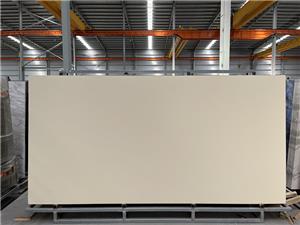
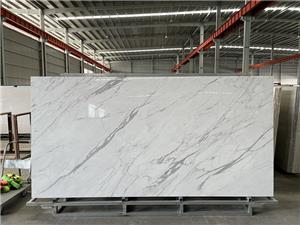
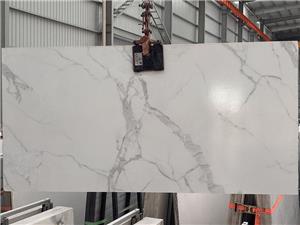
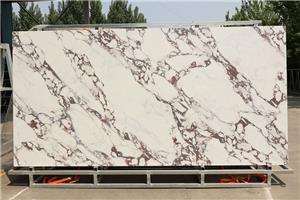
Sintered stone slabs can replicate marble-inspired aesthetics, concrete textures, metallic finishes, or minimalist monochromes. This design flexibility supports broader architectural creativity.
Importantly, aesthetic replication does not eliminate the value of natural stone; rather, it expands design options within engineered parameters.
Commercial Scalability and Global Projects
Large developers and international brands require materials that can be sourced consistently across regions. Matching natural stone across continents can be complex due to quarry origin differences.
Sintered stone slabs, produced under standardized manufacturing conditions, offer greater scalability for global project rollouts.
Risk Reduction in Specification
From a specification perspective, predictability reduces risk. Variations in porosity, hidden fissures, or structural inconsistencies in natural stone may not be visible until fabrication.
Engineered materials provide controlled density and performance benchmarks, making outcomes more predictable when proper standards are followed.
This does not eliminate installation risk—but it reduces uncertainty tied to geological variation.
Where Natural Stone Still Holds Value
Despite these shifts, natural stone retains strong relevance in luxury projects, heritage restorations, and applications where authenticity is paramount. Its uniqueness remains unmatched in certain contexts.
The market transition is not about replacement in every scenario. It is about alignment with modern performance and procurement expectations.
The Broader Market Evolution
The rise of sintered stone slabs reflects broader changes in architecture:
Increased emphasis on durability and low maintenance
Greater demand for large-format continuity
Heightened sustainability awareness
Faster construction timelines
Standardized global brand environments
As these trends continue, engineered surfaces are likely to play an increasingly prominent role in project specifications.
Conclusion: A Material Shift Driven by Modern Priorities
Sintered stone slabs are not replacing natural stone because tradition has lost value. They are gaining market share because modern projects demand consistency, durability, scalability, and cost predictability.
For architects and developers evaluating material strategies, the decision should be grounded in application requirements, performance expectations, and long-term lifecycle considerations.
Understanding why this shift is occurring enables informed specification decisions and positions project teams to align materials with contemporary architectural priorities.