
How to Specify Sintered Stone Before Requesting a Quote
When requesting a quotation for sintered stone, the quality of the quotation depends heavily on the quality of the information provided to the supplier. A request that simply describes a color, thickness, or general appearance may leave several important variables open to interpretation.
For professional buyers, this can create a practical problem: different suppliers may return different prices because they are not actually quoting the same product or scope of supply.
A clear sintered stone specification gives suppliers a common basis for preparing an offer and gives buyers a more reliable basis for evaluating the responses. The objective is not to create unnecessary paperwork. It is to define the material and project requirements clearly enough that important differences are visible before price becomes the main comparison.
Why a Clear Sintered Stone Specification Matters Before Requesting a Quote
A sintered stone quotation is meaningful only when the supplier understands what is being requested.
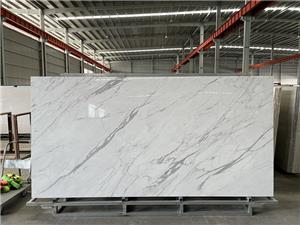
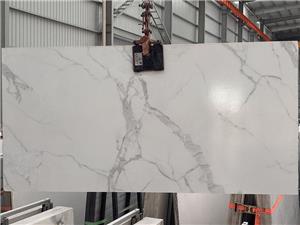
Consider a request for a “12mm white marble-look sintered stone.” It may still leave questions about the exact product reference, surface finish, format, quantity, visual characteristics, or whether the buyer needs standard slabs, tiles, cut-to-size material, or another form of supply.
If those details are interpreted differently by different suppliers, the resulting quotations may appear comparable while representing different products or scopes.
A clear specification therefore serves two purposes. It communicates the buyer's actual requirement, and it establishes a common reference point for subsequent commercial discussions.
This is particularly important for importers, distributors, fabricators, contractors, and project procurement teams that may need to evaluate several suppliers or repeat the same material order later.
The goal is not to specify every possible detail before contacting a supplier. It is to identify the information that materially affects the product being quoted and the scope of the offer.
Start With the Application and Project Requirement
Begin by explaining where and how the material will be used.
The application provides context for the rest of the specification because technical, visual, fabrication, and documentation requirements can vary according to the project. A material intended for a countertop may be specified differently from material intended for a wall application, furniture component, flooring project, or commercial interior.
The project context can also help the manufacturer determine which technical information is relevant. If the material will be fabricated into finished components, for example, fabrication-related requirements may need to be confirmed before production. If the material is intended for a particular destination market or commercial project, applicable documentation may also need to be identified.
The application does not need to become a long technical description. A concise statement of the intended use and project context is usually a more useful starting point than a general request for “high-quality sintered stone.”
Identify the Exact Sintered Stone Product
Once the application is established, identify the material as specifically as possible.
If a particular collection, design, product code, or manufacturer reference has already been selected, include it in the request. If the material was identified from a sample, catalog, website, or previous order, provide the relevant reference where available.
This distinction matters because a descriptive name such as “Calacatta marble-look” may describe an appearance rather than one specific product. Different manufacturers can use similar names for products with different designs, finishes, formats, or technical characteristics.
When the exact product has not yet been selected, describe the desired appearance and provide a visual reference or other information that helps suppliers understand the target. The supplier can then confirm which available product most closely matches the requirement.
The buyer-defined requirement and the manufacturer's product confirmation should remain distinct. A buyer can specify the desired material characteristics, but the manufacturer should confirm the exact product reference, available options, and applicable technical information.
Define Thickness and Format Without Leaving Room for Ambiguity
Thickness and format should be stated clearly when they are known requirements.
For example, specify whether the project requires slabs, tiles, cut-to-size pieces, or another supply format. If particular dimensions are required, state them in the quotation request rather than assuming that a supplier will interpret “large slab” or “standard size” in the same way.
The appropriate thickness and format depend on the application and project requirements. The purpose of the RFQ is not to replace technical design or fabrication decisions, but to ensure that the supplier is quoting the material in the form actually required.
For background on thickness selection, see How to Choose the Right Sintered Stone Thickness for a Project. For a direct comparison of common thickness options, see 6mm vs 12mm vs 20mm Sintered Stone: Which Thickness Fits the Application.
Where slab dimensions or large-format requirements are important to the project, the buyer should also confirm the manufacturer's available formats rather than assuming that a particular size is universally available. How Large Can Sintered Stone Slabs Be provides additional context on this issue.
Specify Surface Finish, Color, and Visual Expectations
Appearance should be described with enough precision to distinguish the desired product from similar alternatives.
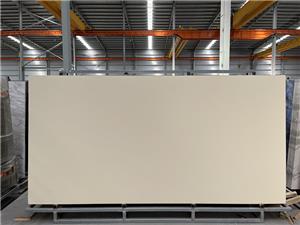
Color and design are obvious starting points, but surface finish can also affect the material selected. Where relevant, specify whether the requirement is for a particular finish and whether the visual reference is based on a manufacturer sample, product reference, project image, or previously approved material.
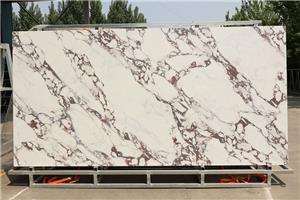
For marble-look and other patterned designs, the buyer may also need to communicate expectations concerning pattern, vein direction, or acceptable visual variation. These details can become particularly important when multiple slabs or pieces are intended to form a visually coordinated installation.
A sample can help establish the intended appearance, but a small sample should not automatically be treated as a complete description of every visual characteristic of a full slab. Where the project is particularly sensitive to pattern continuity or visual variation, confirm the manufacturer's available approval and production-reference process before ordering.
The objective is to give the supplier a clear visual target while recognizing that natural-looking patterns and manufactured surface designs can require product-specific confirmation.
State Quantity and Scope of Supply Clearly
The quantity should be expressed in the form that corresponds to what the supplier is actually being asked to provide.
A request for a certain number of slabs is different from a request for a defined quantity of tiles, cut-to-size pieces, or finished components. Similarly, a project quantity may not be the same as the amount of raw material required after fabrication and production considerations.
The RFQ should therefore make clear whether the buyer is requesting standard material, cut-to-size supply, fabricated components, or another defined scope.
This helps prevent a common procurement problem: two suppliers can quote different prices because one has priced the material only while another has included additional processing or supply requirements.
The specification does not need to determine every commercial term in advance. It simply needs to make the physical quantity and basic supply scope clear enough that the quotations can be evaluated on the same basis.
Include the Technical and Documentation Requirements That Matter
Technical requirements should be included when they are relevant to the application, project, or destination market.
Depending on the project, the buyer may need technical data, test information, fabrication guidance, product documentation, or market-specific documentation. These requirements should be identified early enough for the manufacturer to confirm what is available and applicable.
Avoid treating every certificate or test report as a universal requirement. The appropriate documentation depends on the product, application, project specification, and destination-market requirements.
It is also useful to distinguish between documentation that the buyer specifically requires and documentation that the manufacturer can provide for reference. If a project specification requires particular testing or documentation, communicate that requirement explicitly rather than assuming that a general product datasheet will satisfy it.
Where fabrication is part of the intended use, product-specific fabrication guidance may also need to be confirmed. Technical requirements that affect how the material can be processed should be addressed before the order is finalized.
Clarify Packaging, Identification, and Project-Specific Requirements
Packaging and identification requirements can be part of the product specification when they materially affect how the order needs to be supplied.
For example, a project may require specific labeling, product references, packing identification, or separation of different colors, formats, or project components. A distributor may also have requirements for identifying products before they enter its own inventory system.
These details should be communicated before quotation or production when they affect the supplier's scope.
The purpose is not to turn the RFQ into a freight manual. It is to make project-specific supply conditions visible early enough for the manufacturer to confirm what can be accommodated and whether they affect the quotation.
For international orders, requirements concerning documentation, labeling, or packaging should be agreed with the supplier before production rather than introduced after the goods are ready for shipment.
Turn the Specification Into a Clear RFQ
Once the main requirements have been defined, they can be brought together into a concise quotation request.
A useful sequence is:
application and project context → product/reference → thickness and format → appearance requirements → quantity → supply scope → applicable technical or documentation requirements → project-specific conditions.
The information does not have to appear as a formal specification document in every case. What matters is that the same fundamental requirement is communicated consistently to each supplier being evaluated.
If a product reference is not yet fixed, state that clearly. If a technical requirement still needs manufacturer confirmation, identify it rather than presenting an assumption as a confirmed specification.
This approach gives suppliers enough information to identify the product and scope they are expected to quote while leaving room for them to confirm manufacturer-specific details.
For international sourcing projects, this specification stage should come before broader supplier evaluation and production planning. A clearly defined requirement makes later sourcing decisions more meaningful.
Review the Specification Before Comparing Supplier Quotations
Before comparing prices, check whether the suppliers have actually quoted the same fundamental requirement.
Confirm that the product reference, thickness, format, finish, visual target, quantity, and supply scope correspond to what was requested. Where a requirement was subject to manufacturer confirmation, check how each supplier has addressed it.
This is where a clear specification becomes commercially valuable. It separates genuine price differences from differences caused by the products or services being offered.
Once the underlying requirement is aligned, the buyer can move to a broader assessment of the quotations, including commercial terms, quality considerations, packaging, logistics, and other factors relevant to the order.
For a detailed framework for comparing sintered stone supplier quotations, see How to Compare Sintered Stone Supplier Quotations.
If the remaining questions concern the manufacturer's ability to meet the agreed requirement, What to Ask a Sintered Stone Manufacturer Before Ordering provides the next stage of due diligence.
A Clear Specification Creates a Better Starting Point for Sourcing
A good sintered stone specification does not need to be complicated. Its purpose is to remove uncertainty from the material and project requirements before suppliers prepare their offers.
When the application, product identity, thickness and format, appearance, quantity, supply scope, and applicable technical requirements are communicated clearly, suppliers have a stronger basis for preparing quotations and buyers have a stronger basis for evaluating them.
The same specification can also become an important reference later in the purchasing process, from manufacturer confirmation and sample review through production, quality control, and repeat orders.
In other words, a quotation is only as comparable as the specification behind it. Defining the requirement clearly before requesting the price creates a more reliable starting point for the entire sourcing process.